
The Copycat Myth: Why Your Picture of China is Stuck in 2005
By Chris Gassner · July 19, 2026 · 5 min read · 👁 0 views
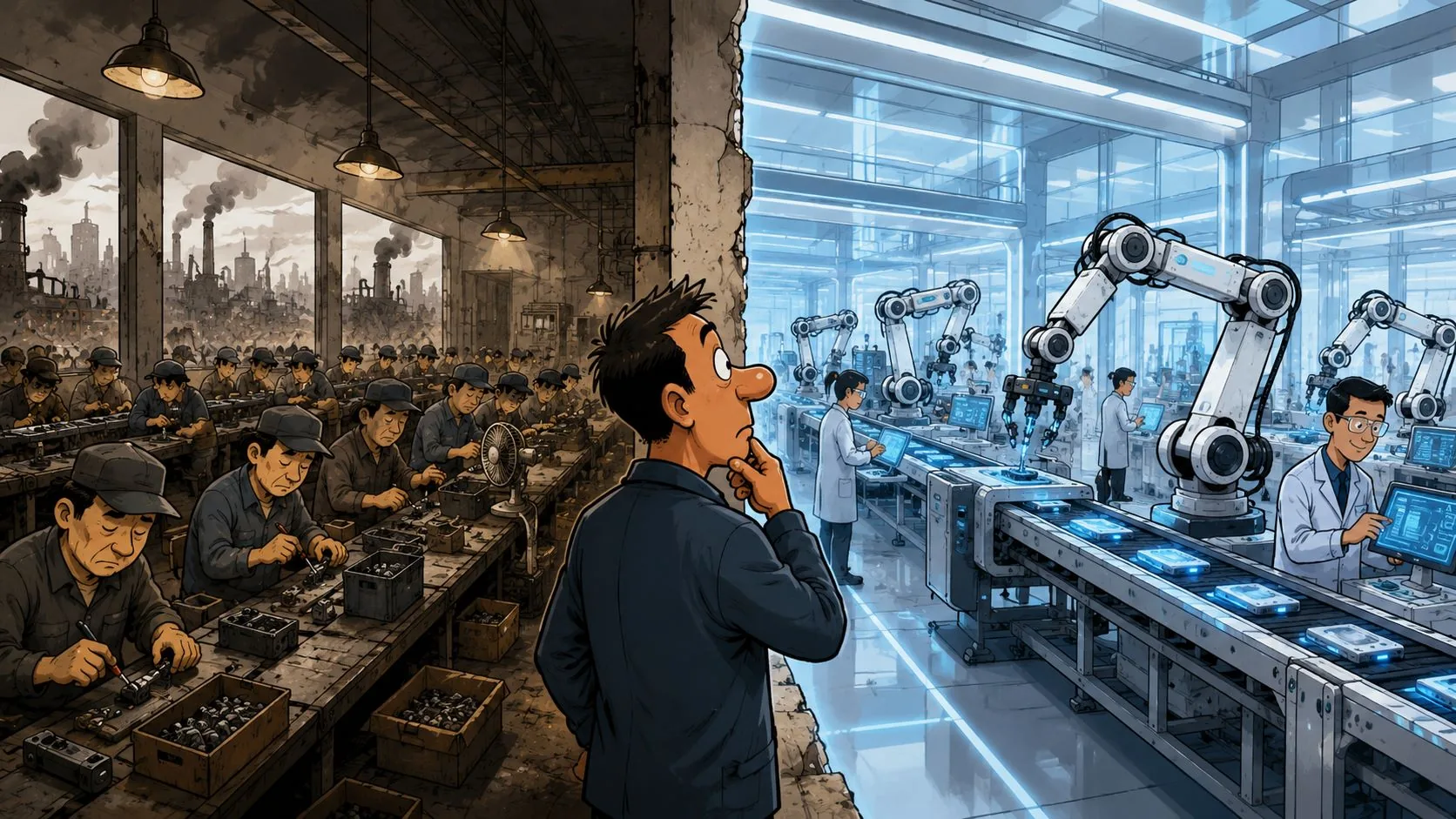
Some ideas simply refuse to die. They’re like cuckoo clocks, beige corduroy trousers, or people who still think Facebook is “that new thing on the Internet.”
One of those ideas goes like this:
“The Chinese can only copy.”
Whenever I return to Germany, it usually takes less than 48 hours before someone says it. Sometimes over dinner. Sometimes over a beer. Sometimes with the confidence of a man who has never actually been to China. ‘The Chinese only know how to copy.’ And every single time I wonder whether we’re talking about the same country.”
Of course China copied. Pretending otherwise would be ridiculous. Factories learned by analyzing existing products, taking them apart and building their own versions. Not always elegantly. Not always legally. But anyone who believes that copying was somehow a uniquely Chinese invention should spend a little time reading the history of industrialization. Britain learned from the Dutch. America learned from Europe. Germany learned from Britain. Japan rebuilt by studying Europe and the United States. South Korea followed much the same path. Almost every industrial nation started by standing on someone else’s shoulders.
The difference is that, eventually, you climb down and start walking on your own.
That moment seems to have escaped a surprising number of people outside China.
Whenever I’m back in Germany, I still meet people whose picture of China is frozen somewhere in the early 2000s. Cheap T-shirts. Plastic toys. Poor copies of Western products. A country that manufactures cheaply but doesn’t innovate.
I usually smile.
Not because I think they’re wrong for remembering that China.
But because I already know exactly where the conversation is heading. It’s a bit like watching an old detective series. You may not remember every detail, but you know precisely when someone is going to deliver the line they’ve been waiting to say.
Not because that image of China was never true.
Simply because it’s about as current as dial-up internet, Nokia ringtones and asking someone to hang up the phone because you wanted to go online.
I’ve spent more than two decades working in Chinese manufacturing. I regularly walk through engineering departments, tool shops and production facilities. And believe me, the conversations have changed completely.
Twenty years ago, the question was:
“How does this work?”
Today it’s:
“How do we make it better?”
Or even more often:
“Can AI finish this before this afternoon?”
If it could also build the PowerPoint presentation, reserve the meeting room and gently remind everyone to answer their emails, it would probably qualify for Employee of the Month.
That’s a very different conversation.
Visit a modern factory in Shenzhen, Dongguan or Suzhou today and you won’t find endless rows of people tightening screws all day long. Instead you’ll see robots, autonomous transport systems, AI-powered quality inspection, digital twins and engineers using artificial intelligence to optimise designs before a physical prototype even exists.
Sometimes I joke that the only person not working with a screen anymore is the maintenance guy.
Even he probably unlocks the doors with facial recognition.
The real revolution isn’t happening where television cameras are pointing.
It’s happening on Monday mornings at nine o’clock.
Cold coffee.
Three computer screens.
A meeting that was supposed to last thirty minutes.
And an AI assistant that has already suggested the first solution before someone has even managed to open the meeting agenda.
Innovation simply looks different today.
People still imagine a brilliant inventor working alone in a garage.
Today’s breakthroughs often come from thousands of engineers solving the same problem together. Artificial intelligence analyses millions of data points. Simulations replace expensive prototypes. Development cycles that once took years are now measured in months, sometimes even weeks.
Less romantic?
Absolutely.
Less effective?
Not even close.
Take CATL.
Many people have never even heard the name.
Yet a significant share of the world’s electric vehicle batteries comes from this Chinese company. Every year CATL invests billions into research and development while tens of thousands of engineers work on next-generation battery chemistry, ultra-fast charging technologies and future energy storage systems.
Or take Huawei.
Whatever your opinion of the company may be isn’t really the point.
The point is that businesses investing billions of dollars every year in research and development are no longer spending their time wondering what someone else invented first.
They’re trying to invent what comes next.
That’s roughly the moment when the old stereotype starts shifting uncomfortably in its chair.
What fascinates me even more, however, is something else.
Innovation in China has become so normal that hardly anyone even notices it anymore.
The first time people saw robotaxis, everyone stopped and stared.
Today passengers simply get in, look at their phones and complain that the air conditioning feels as if it’s been calibrated somewhere between Antarctica and outer space.
Delivery robots?
Normal.
Facial recognition?
Normal.
Mobile payments?
Normal.
AI in the office?
Normal.
My wallet, on the other hand, has quietly become a historical artefact. I still carry it mostly out of politeness. It occupies roughly the same place in modern life as a fax machine. You still own one. But if somebody actually uses it, everyone turns around in surprise.
Perhaps that’s the biggest difference.
While many countries spend years debating whether a technology should be adopted, China often builds it, launches it, improves it and starts working on Version 2 before the debate has even finished.
That doesn’t mean China gets everything right.
Of course there are failed investments.
Of course some companies still copy existing products.
Of course not every innovation succeeds.
Just like everywhere else.
But reducing an entire country to copying would be about as fair as describing Germany exclusively through fax machines, Berlin Airport and government offices that print online forms, stamp them and then scan them back into the computer.
What many people also underestimate is the sheer scale of China’s investment in research.
Every year China spends enormous sums on artificial intelligence, robotics, semiconductors, biotechnology and advanced manufacturing. This isn’t a short-term campaign.
It’s a long-term national strategy.
And perhaps that’s where the misunderstanding begins.
Many people think innovation means inventing an entirely new wheel.
China often sees innovation differently.
Make the wheel lighter.
Make it cheaper.
Make it smarter.
Then build ten million of them before everyone else has finished discussing what colour it should be.
Maybe the real problem isn’t China.
Maybe it’s us.
Because mental pictures grow old.
Most people update their smartphones every few weeks.
Their picture of China, however, hasn’t received a software update since the days when people actually paid for downloadable ringtones.
And perhaps that’s the greatest irony of all.
The very people who accuse China of living in the past are often looking at a version of China that disappeared years ago.
Chris Gassner
Keep reading
All in Articles
Sumofox Hybrid Training: Where Shekou Gets Stronger Together
Sumofox Hybrid Training has carved out its own bold corner of Shekou, Shenzhen a community focused functional fitness and hybrid training gym that...
Maybe it Isn't Forgetfulness After All
I hear some version of this constantly. Someone starts talking, stops halfway through a sentence, and apologizes. "Sorry, I lost my train of...

BnYo: Burgers, Froyo & a Fresh New Bite in Qianhai
From the team behind WESTWOOD comes a new casual dining concept, built around freshly made burgers, Greek froyo and a little more...