
A Meetup the Size of a Conference: Omarchy’s Chinese Community Comes Together in Shenzhen
By Bao Ge · November 2, 2026 · 4 min read · 👁 0 views
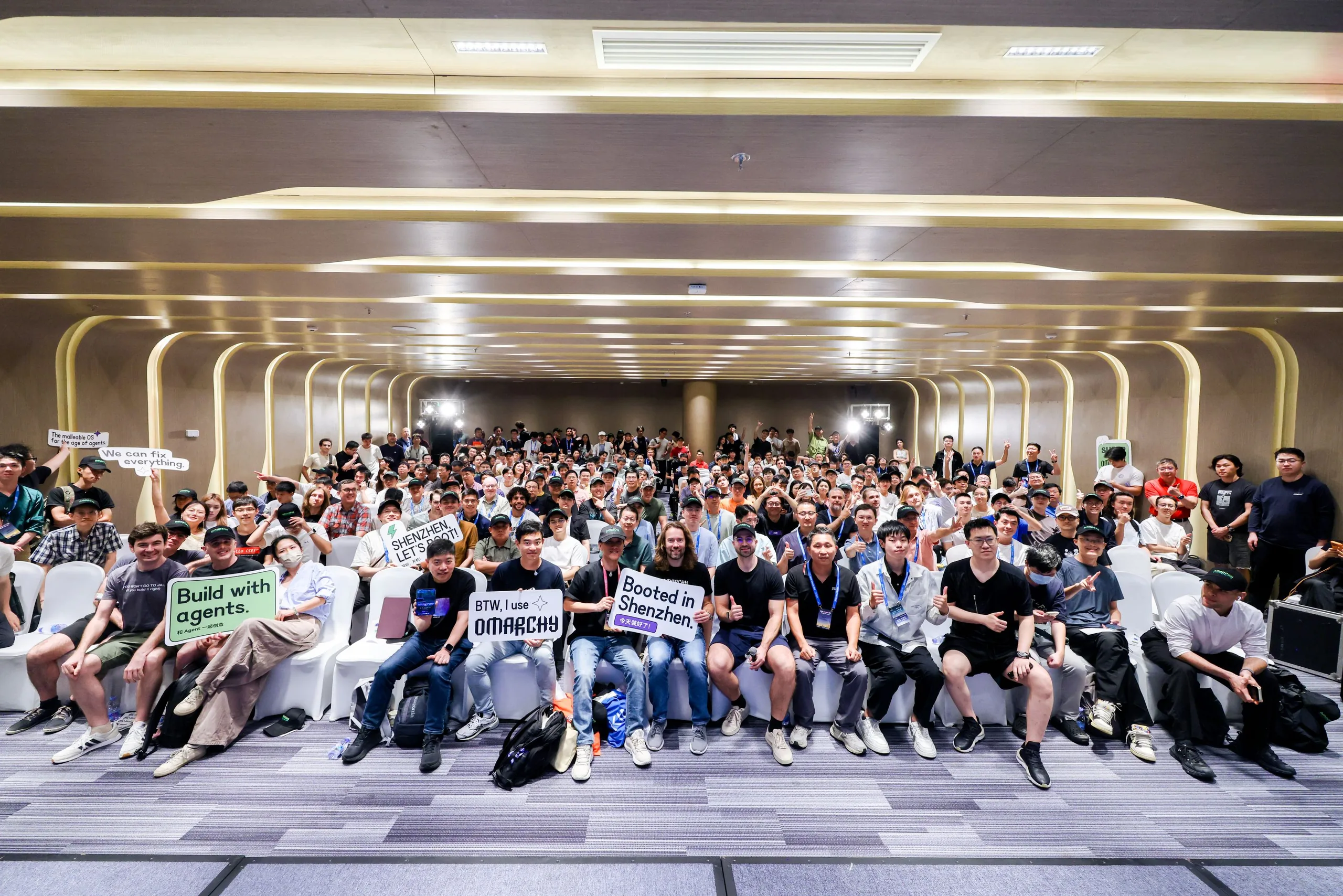
Full-room community group photograph with Omarchy signs
Image courtesy of Jooy https://x.com/momentvista
“The energy was electric last night. A meetup the size of a conference!”
That was David Heinemeier Hansson’s reaction after the Omarchy Shenzhen gathering on October 17. The creator of Ruby on Rails and Omarchy had come to the city for GOSIM Shenzhen 2026. Around that visit, a community event became something much bigger than a casual evening meetup: a packed room bringing together developers, open-source enthusiasts, hardware builders, and people eager to meet the person behind tools they use.
The photographs tell part of the story. Rows of attendees stretch to the back of the room. In the group shot, handmade-style signs declare “BTW, I use Omarchy” and “Booted in Shenzhen.” Elsewhere, people cluster around DHH with phones and cameras. The atmosphere looks less like a product launch than a community finally getting to meet in person.
More than an a Audience
Hosted by YourChinaGuy and OpenClaw Asia, the event paired an install party with a conversation with DHH, community Q&A, lightning demos, and a pizza social. The organizers reported more than 500 sign-ups. That is a measure of interest, not a verified headcount, but the photographs leave little doubt that the room was busy.
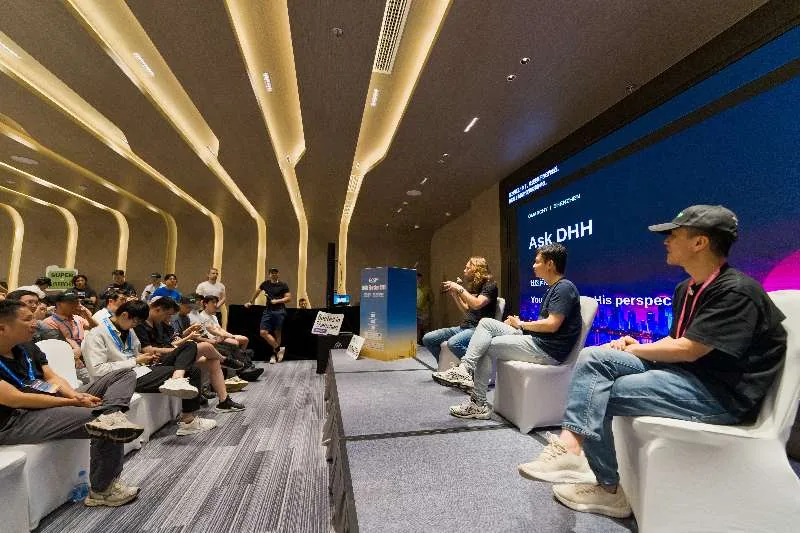
Wide panel and audience
Image courtesy of Jooy https://x.com/momentvista
The hands-on element mattered. The published programme called for ten experienced community volunteers to help people install Omarchy, configure their machines, and explore everyday workflows. Existing users were encouraged to bring their setups and projects; newcomers could come to watch and learn. USB drives, stickers, and Xiaomi MiMo-sponsored API credits were part of the preparations.
That format gave people a way to participate beyond listening to a well-known founder. An operating system becomes more useful when someone nearby can help you install it, explain a configuration, or show what they have built with it.
From software enthusiasm to hardware experiments
The planned demo lineup showed how widely the community was interpreting Omarchy. It included work involving CIX hardware, a Xiaomi tablet, an Alibaba Cloud development environment, customization and plugins, local AI, wireless audio, remote access, and an experimental port to an iPhone 11.
These were programme listings, rather than a claim that every scheduled demo ran exactly as advertised. But together they reveal the ambition of the gathering: Omarchy was not being treated simply as a desktop to download. It was becoming a starting point for experiments across devices, infrastructure, and developer workflows.
The GOSIM connection provided a natural setting. DHH’s conference appearance and the separately registered community meetup brought the same open-source interests into different formats: a conference stage, then a more participatory gathering around questions, projects, and practical help.
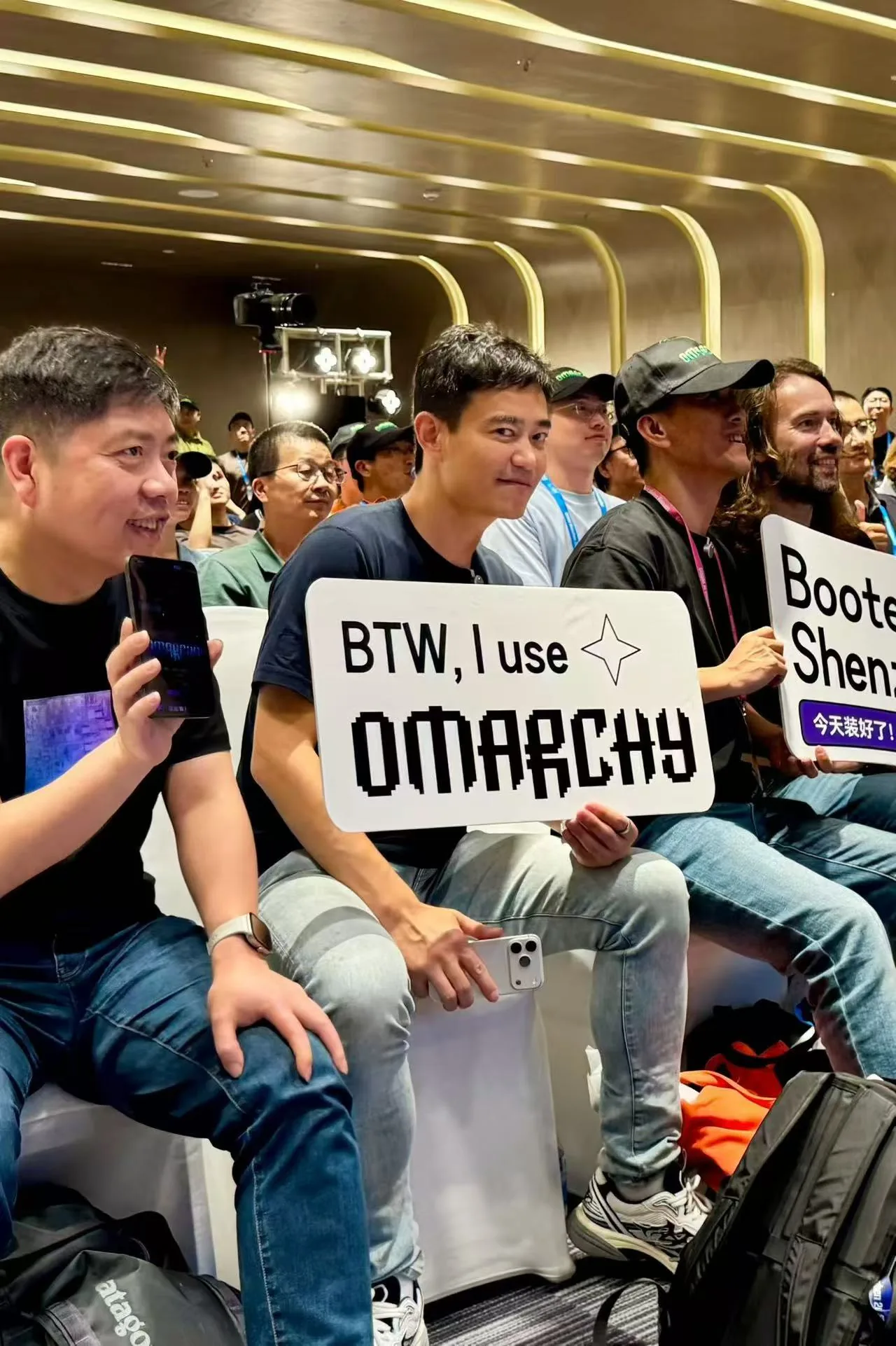
Attendees holding the “BTW, I use Omarchy” signs
Image courtesy of Jooy https://x.com/momentvista
A Chinese Community Building its Own Momentum
The Shenzhen event also sits within a broader localization effort. In public posts, DHH has highlighted the Omarchy China group’s speed, plans for a region switcher to make the system usable inside China without a VPN, and internationalization work covering Chinese input methods and dozens of languages.
Those details are less photogenic than a packed room, but they matter just as much. Community growth depends on whether people can actually use the software in their language and local environment. The meetup made that work visible: Chinese users were not just following a project from abroad, but contributing their own knowledge, experiments, and support networks.
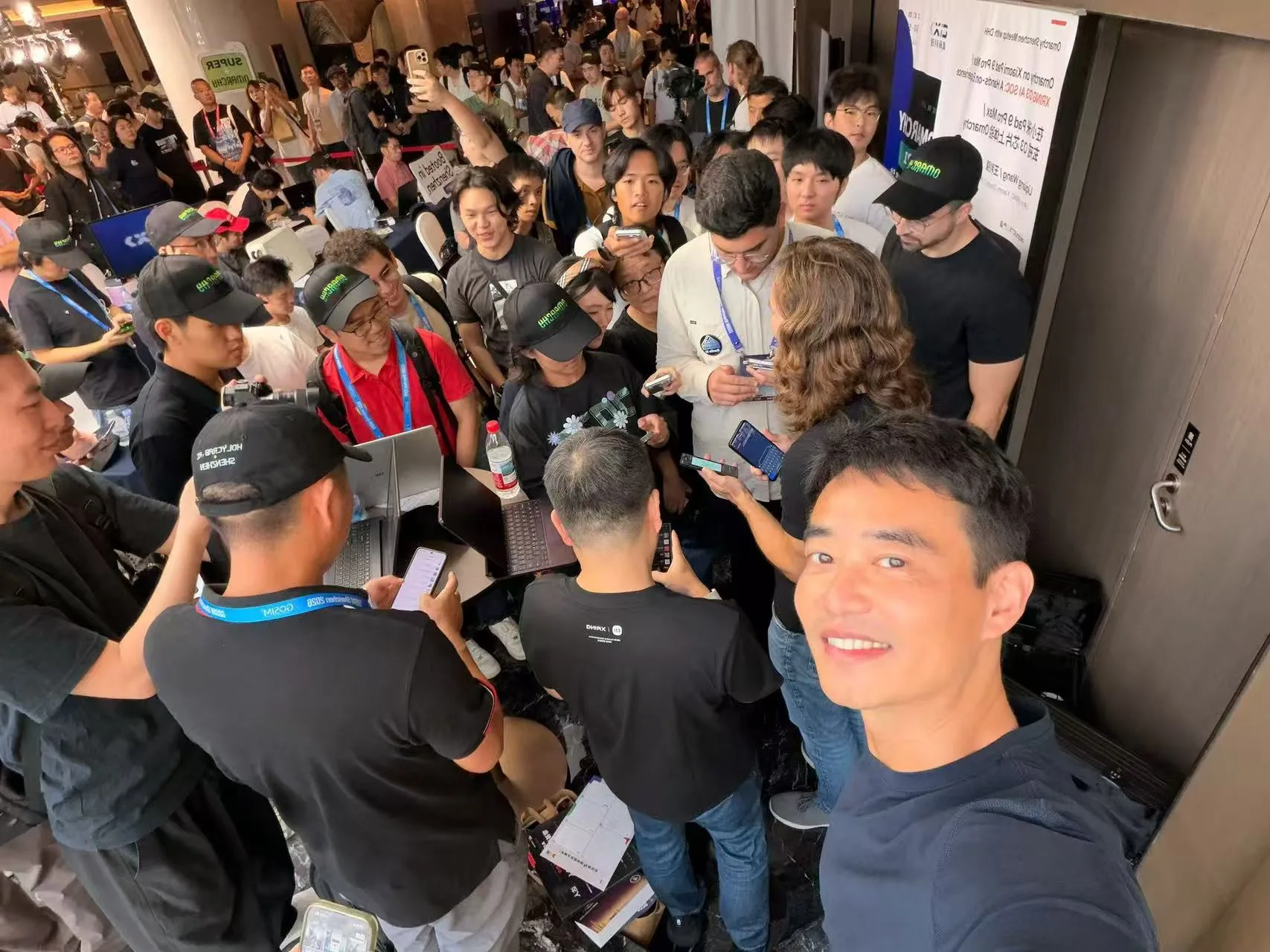
Informal crowd around DHH, away from the panel discussion
Image courtesy of https://x.com/xdanger
From a Meetup to Xiaomi’s Factory
Some of the most interesting connections at a community meetup happen after the programme ended. In Shenzhen, they reached well beyond software.
Among those taking part was Liqiang Wang, Vice President of XRING at Xiaomi Group, who had been invited to showcase his work with Omarchy. Conversations continued after the gathering, and an invitation followed: a visit to Xiaomi’s car factory in Beijing, an addition to DHH’s original itinerary.
The visit clearly left an impression. In an October 23 post, DHH called the tour “incredible,” praising its “unbelievable precision and quality.” He reported that 91% of car construction was automated, with around 1,000 cars produced a day. For him, it challenged the familiar explanation that China’s competitiveness rests on cheap labor: here was a factory where automation did much of the work.
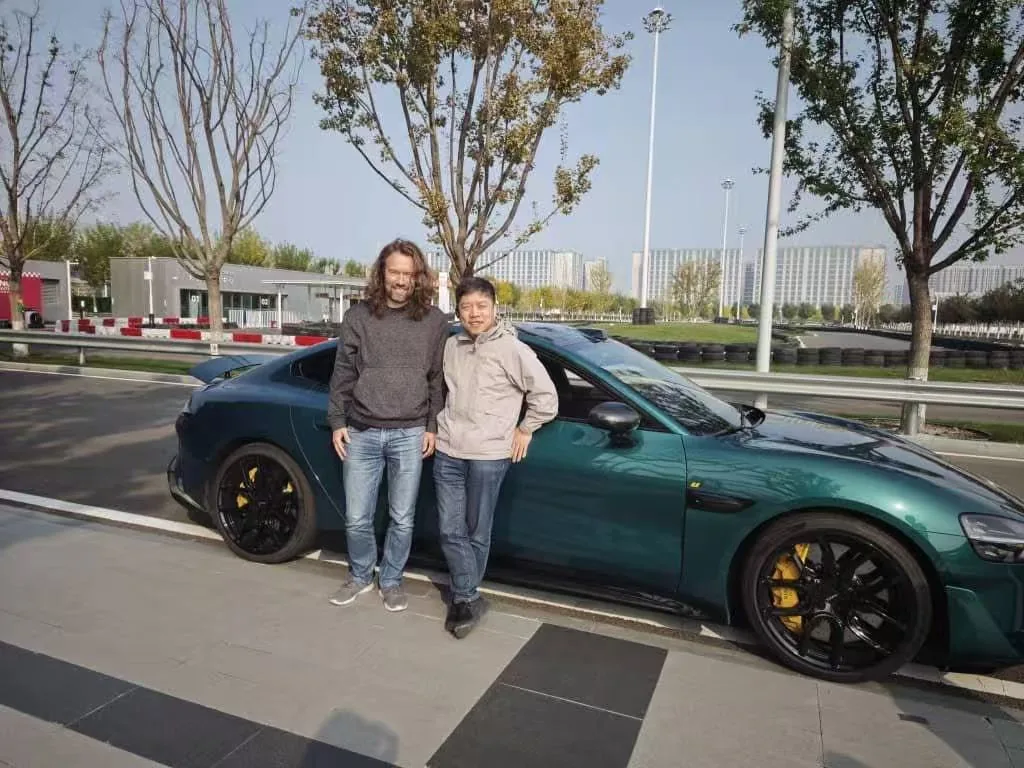
Image courtesy of https://x.com/shujishcn
It was an unexpected extension of the same curiosity that had filled the room in Shenzhen. People came together around an open-source operating system, shared what they were building, and found reasons to keep the conversation going.
That is part of what makes gatherings like this worthwhile. Alongside the installations, demos, and photographs, they create space for encounters nobody could have put on the agenda—and sometimes, a chance to see something remarkable firsthand.
All images courtesy of YourChinaGuy
Keep reading
All in Articles
Your Feet Are the Foundation of Your Body: A Guide To Healthy Feet in Shenzhen By Aphrodita
Every step we take, every walk we enjoy, and every morning run we look forward to is made possible by our feet. Yet, we often pay attention to them...

You Can’t Win Against the Leaves
A reader sent me a poem after my last piece, the one about the grass that grows by itself. It’s short, and it’s about autumn...
Four Seasons Hotel Shenzhen Celebrates 13 Years with an Art Exhibition Inspired by Time and Memory
Shenzhen, September: Four Seasons Hotel Shenzhen marks its 13th anniversary this September with a celebration shaped by art, connection, and the...