
A Shenzhen Driver's Guide to Measuring Distances in Traffic Lights, and Why You Should Just Order the Butter Online
By Chris Gassner · September 10, 2026 · 6 min read · 👁 0 views
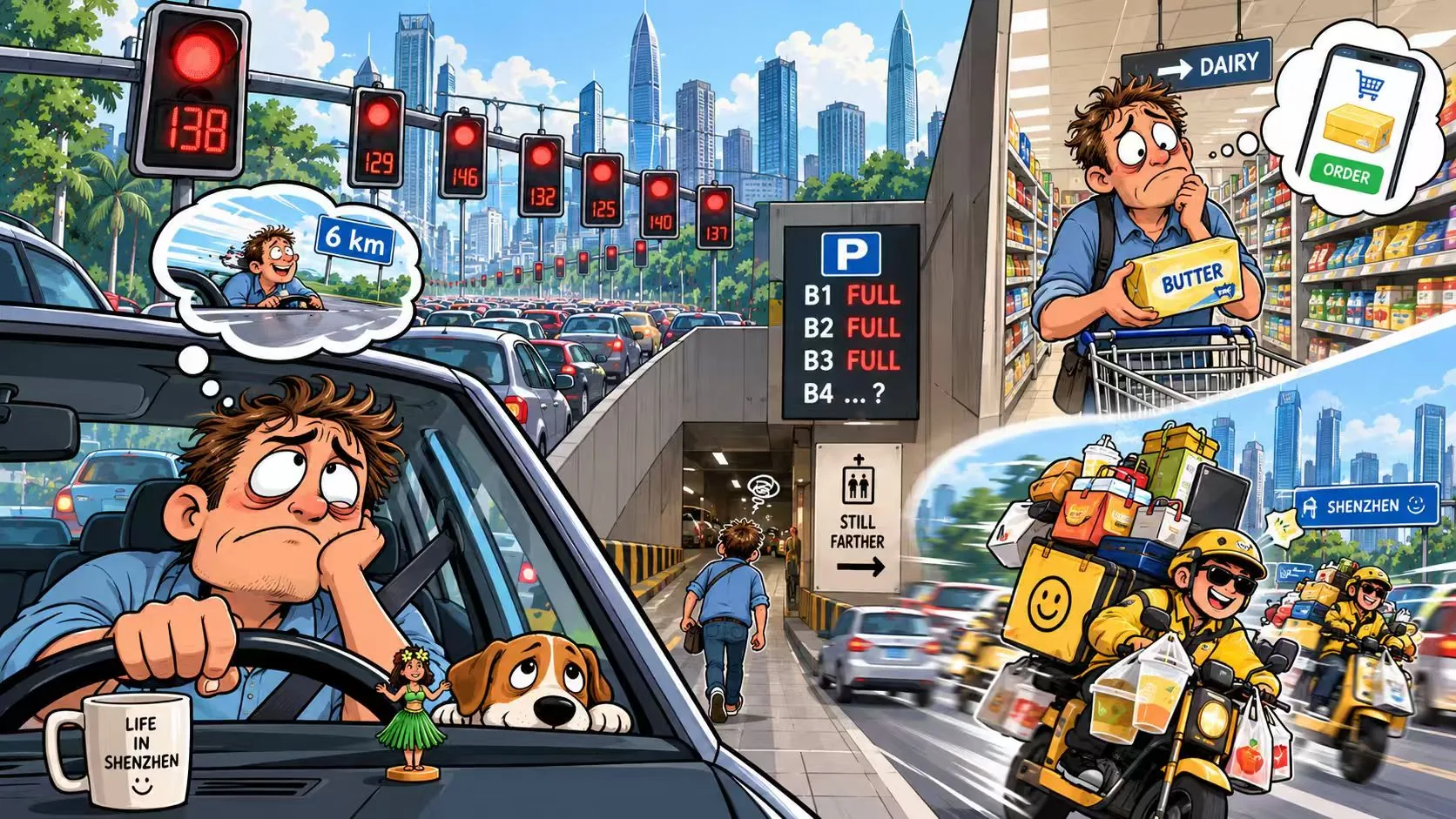
I want to talk about traffic lights today. Traffic lights are a wonderful invention … when they’re green. The rest of the time, every driver hates them. Especially in Shenzhen, where traffic lights are not part of the traffic. They are the traffic..Let’s take a perfectly normal distance: six kilometers. In Germany, six kilometers is not really a distance. It is a minor inconvenience. You get into the car, start the engine, and while you are still deciding what music to listen to, you are basically already there.
In Shenzhen, six kilometers is a journey. Not a major journey. You do not need a visa and there is probably no need to say goodbye to your family. But taking a drink, a snack and perhaps a small book for the road would not be completely unreasonable. Because between you and your destination six kilometers away, there are so many traffic lights that at some point you simply stop counting. And these are not quick little traffic lights. Many of them seem to stay red for 120 or even 150 seconds, then reward you with maybe 25 seconds of green. After the twelfth red light, another traffic light is no longer traffic infrastructure. It is Shenzhen looking you directly in the eye and saying: No.
At an intersection, traffic lights make sense. Four drivers all convinced they should go first … somebody has to disappoint three of them. Otherwise, the discussion ends with everyone taking photographs for the insurance company. So yes, put up a light. Let the other fellow cross. I’m a reasonable man. At least at the first intersection.” Perfectly reasonable. But in Shenzhen, the intersection is optional. A perfectly straight road with no side streets … and there you sit, politely giving way to absolutely nothing. Maybe the crossing road is due in three years. The traffic light arrived early and refuses to wait alone. Meanwhile, they’re testing the red. I can confirm: it works..
It’s for pedestrians,” someone will say. Fair enough. Other places use a button, which has the obvious design flaw of requiring an actual pedestrian. Where I live, we’ve solved that. The light turns red regardless. Fifty cars politely give way to an empty pavement. Someone might be born nearby and want to cross later. We wouldn’t want to keep him waiting.At first, this can look slightly pointless. But perhaps we simply fail to understand the bigger idea. Maybe the light is not there for the pedestrian at all. Maybe it is Shenzhen’s free wellness program for drivers. Spa treatment without leaving the car. Engine running, air conditioning on, 120 seconds of doing absolutely nothing. Breathe. Think. Reflect on life.
Perhaps this is the designated moment to consider your family, your career and whether buying a bicycle at this point would count as personal growth. Eventually, of course, the meditation session ends. The light turns green. Beautiful green. Twenty five seconds. Maybe thirty. The only problem is that not every driver immediately receives this dramatic new information.
The first driver is usually still sitting there. Maybe thinking. Maybe writing a message. Maybe watching a video. Maybe the mindfulness traffic light worked a little too well on him. The light is green. Five seconds. Ten seconds. The driver is still sitting there. Behind him, fifty cars have now made this their personal problem. And this is where the other type of Shenzhen driver enters the story. These people apparently have a nervous system directly connected to the traffic light controller. The light does not even properly turn green. The green glow is only just beginning to appear. The green light is practically still loading. And behind you: MEEEEEP!
The driver’s hand must have been resting on the horn already. Biologically, it should not even be possible. The information “the light is green” has to travel from the eye to the brain, from the brain to the arm and from the arm to the horn. A human being needs a certain amount of time for this. Not in Shenzhen. Here, some drivers seem to have a direct wireless connection between the traffic light and the horn. Traffic light detects green. Horn activates. Before you have even seen the green yourself. So after a while, you realize there are basically two great philosophical schools of Shenzhen driving. One group treats green as a suggestion. The other reacts as if they are on the front row of a Formula 1 grid. And there you are, caught between them, simply trying to drive six kilometers without ruining somebody’s racing career.
And eventually, you actually make it. You drop off your passenger, complete your six kilometers, sacrifice a considerable part of your day and leave several traffic lights behind with whom, frankly, you have been through a lot. At that point, you might think the problem is simply getting from one place to another. Unfortunately, there is another version of the same experience. It begins when you decide to do something that sounds even easier: quickly go to the supermarket. Really quickly. Buy one pack of butter. No major shopping trip. No weekend groceries. No expedition to feed a family of twelve. One pack of butter. A mission so simple you should not have to prepare for it mentally. In Europe, it might take ten minutes. In Shenzhen, it is probably better to keep the afternoon free.
The drive there, naturally, comes with the usual collection of red lights. But this time the real entertainment starts when you reach the supermarket, because arriving and having arrived are two completely different things. First, you drive past the entrance because naturally there is no parking space anywhere near it. Then once around the building. Then again. Then you discover the underground car park. Wonderful. B1 full. B2 full. B3 also full. By now, you are roughly fourteen meters underground and further away from your butter than when the entire operation began.
Eventually, somewhere in the geological lower levels of Shenzhen, you find a parking space. Naturally, right at the back. Practically in Dongguan. You walk 500 meters to the elevator, which takes you to the wrong side of the mall. Another 400 meters later, you finally reach the supermarket. Now all you need is butter. Naturally, it is at the opposite end. And when you finally stand there holding one pack of butter, you think: I should have ordered it online.
Which is where Shenzhen becomes ridiculous in the opposite direction, because almost everything else here is fast. Food, coffee, a charging cable, a toothbrush, probably an entire refrigerator … some guy on an electric scooter appears at your door twelve minutes later. The only people who can genuinely move quickly through Shenzhen are the delivery guys. They seem to operate under a separate set of physical laws. Cars are standing still, lights are red, roads are full, and somewhere in between a yellow or blue scooter flies through with eight bags of food, three drinks and what looks like a medium sized television strapped to the back. He gets there. You do not.
And maybe that is the real lesson of life in Shenzhen. Distance here is not measured in kilometers. It is measured in traffic lights. “How far is it?” … “Six kilometers.” Completely useless information. The correct question is: “How many traffic lights?” If the answer is four … drive. If the answer is twelve … bring something to eat. If somebody says “about twenty” … order the butter online.
Anyway, I’d better stop writing. The light turned green twenty seconds ago. Turns out the genius holding everyone up isn’t watching a video. He’s writing a column about traffic.
Chris Gassner
Keep reading
All in Articles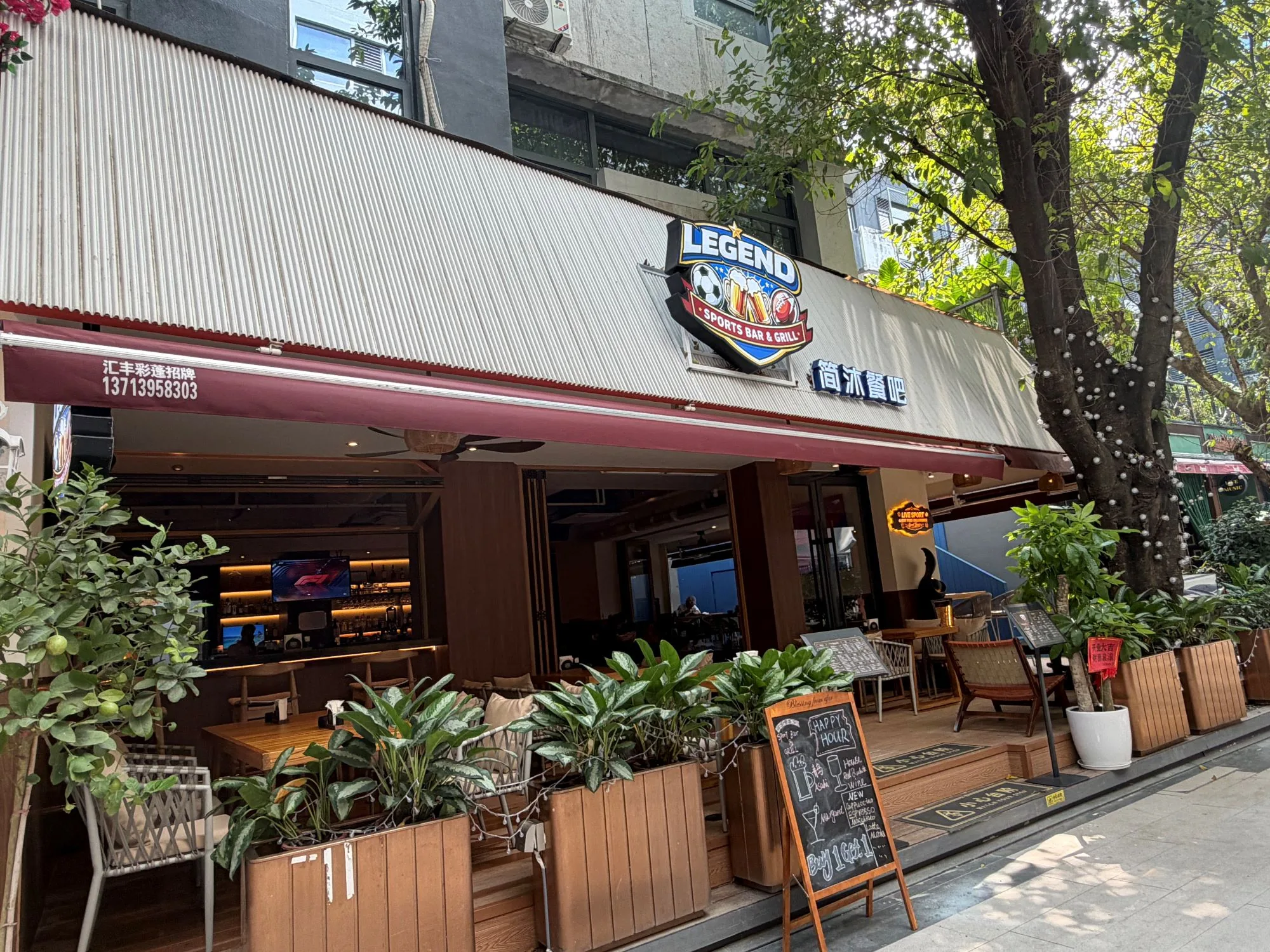
Legend Levels Up: Shekou's Beloved Hangout Reinvents Itself as a Sports Bar & Grill
Some bars are places you go. Legend is a place you return to. For six years, this Shekou staple has anchored the corner of Nanhai Yiku, pouring...
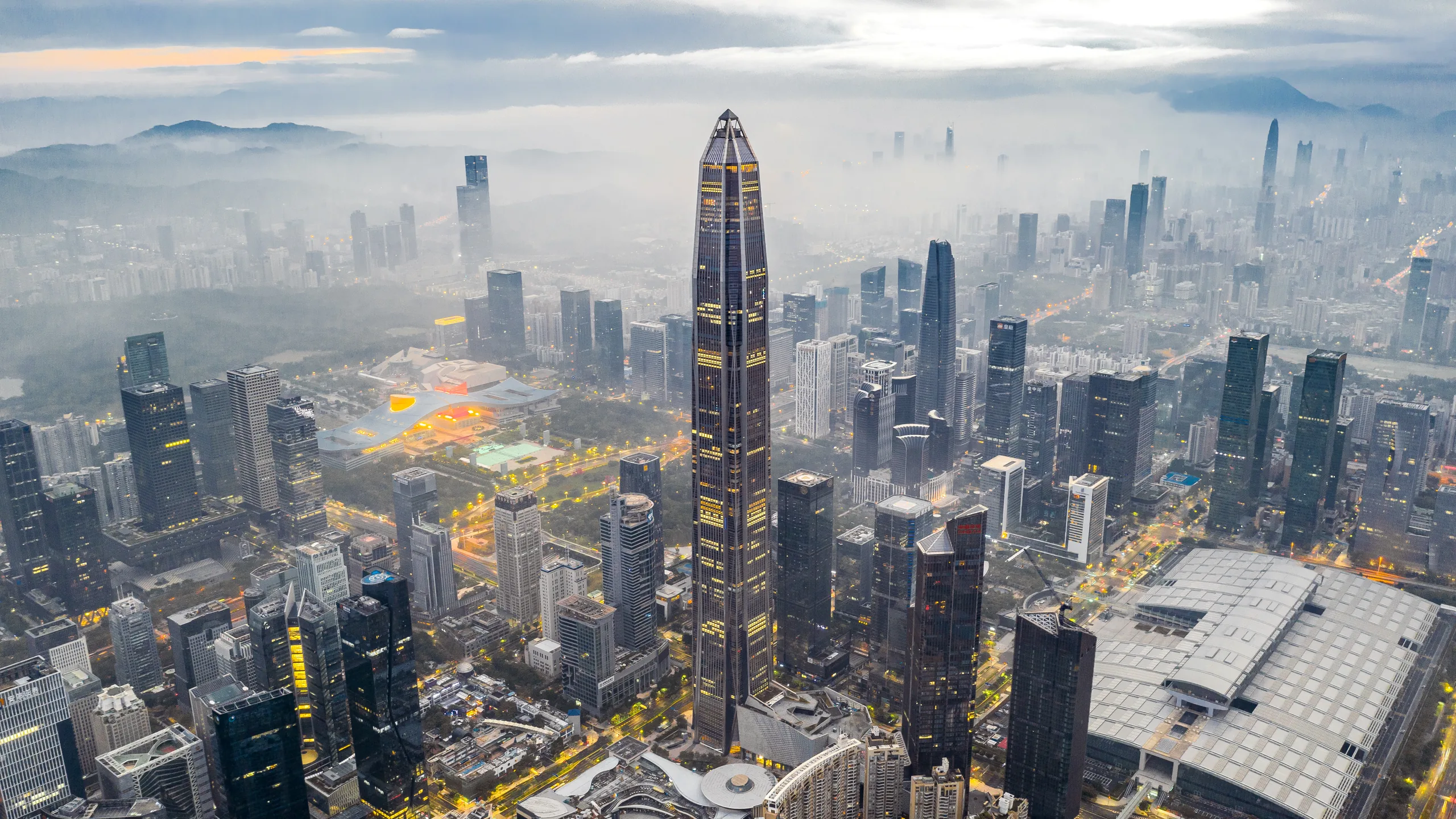
Free Sky Observation Deck: Shenzhen's Window to the Clouds at 547.6 Meters
High above the pulsating heart of Shenzhen, the Free Sky Observation Deck commands the 116th floor of the Ping An Finance Center at a...

China's New Kind of Pet Remembers Your Conversations, Never Needs a Vet, and Doesn't Pee on the Carpet
I once wrote about dogs in strollers in China, and after that I stopped being surprised by what comes rolling towards me in a shopping mall. Baby,...