
From Cassette Tapes and Pencils to Facial Recognition and QR Codes
By Chris Gassner · June 30, 2026 · 5 min read · 👁 0 views
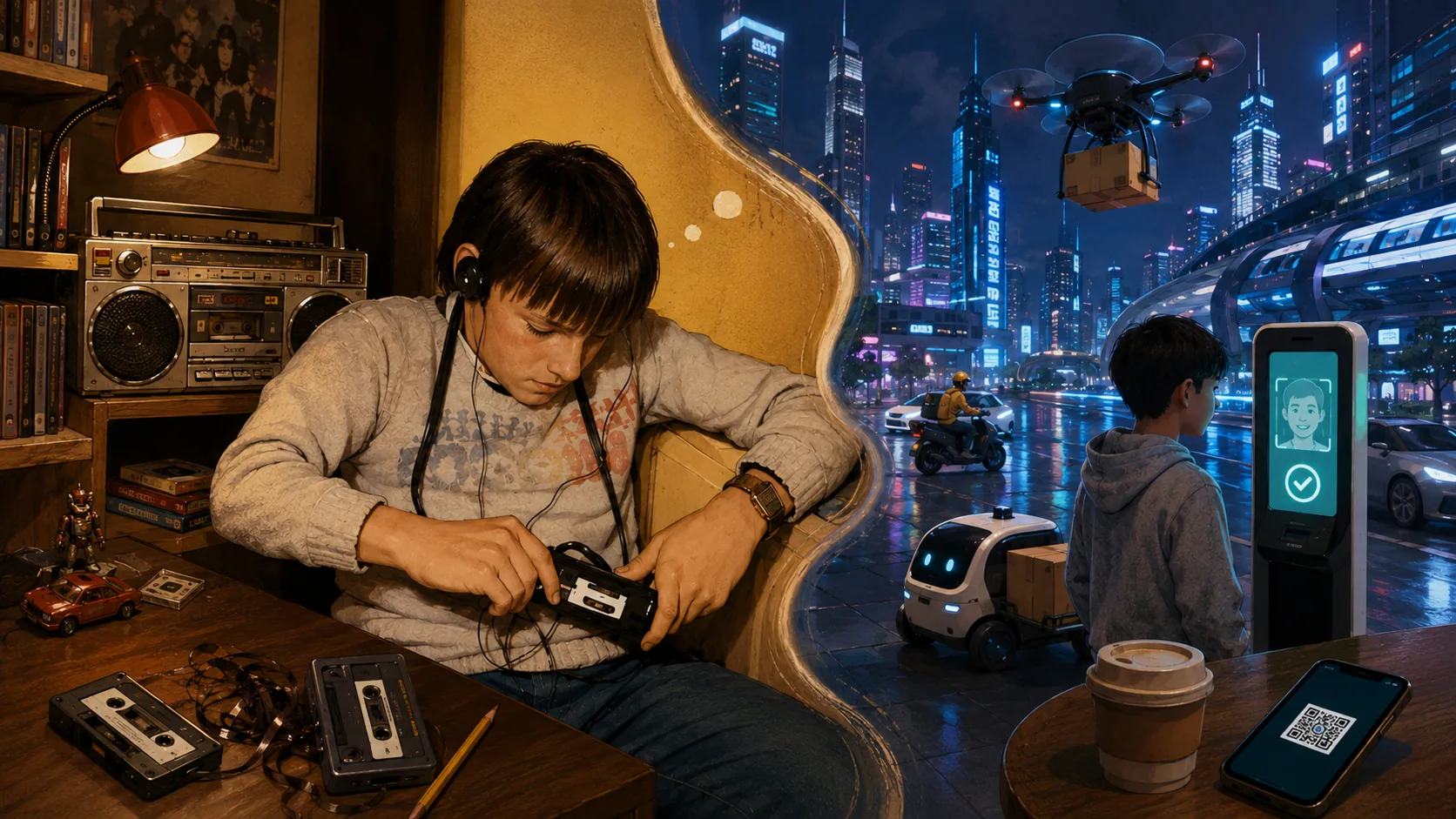
The other day, I was sitting in a café in Shenzhen when I noticed a boy, maybe 15 years old, paying for his drink with facial recognition. No phone. No credit card. No cash. He simply looked into a camera, picked up his hot chocolate, and walked away.
To him, it was completely normal.
I couldn’t help but smile.
Not because of the technology, but because it suddenly reminded me of sitting in front of a cassette recorder in the 1980s with nothing but a pencil, desperately trying to rescue a cassette tape that had been chewed up by the machine.
If you’re under thirty and wondering what on earth a pencil has to do with music that’s exactly the point.
Our generation may be the last one to have lived in two completely different worlds.
We grew up when telephones were attached to the wall. When your parents had absolutely no way of reaching you once you left the house. If you said, “I’ll be home at four,” you’d better be home at four. There was no text message saying, “Running five minutes late.”
There was also one question that simply didn’t exist back then.
“Where are you?”
Nobody asked it.
If someone answered the phone, you already knew exactly where they were.
And somehow… we all survived.
We listened to music on cassette tapes. When the cassette player swallowed the tape and it did that surprisingly often, a delicate repair operation began. Armed with nothing more than a pencil, we carefully wound the tape back into its cassette. Everybody knew how to do it. Back then, there were probably more people who could repair a cassette tape than there are today who can install a printer without swearing.
And if we wanted to own our favourite song, there was no Spotify or Apple Music. We sat in front of the radio with one finger hovering over the Record button, waiting. Sometimes for ages. We hoped our favourite song would finally come on, and prayed that the DJ wouldn’t start talking right over the first chorus. If he did, his voice became a permanent part of the song. Back then, that was perfectly normal. Today, someone would probably file a complaint after ten seconds.
Then there was the famous 3.5-inch floppy disk.
Show one to a child today and they’ll probably think it’s a designer coaster, some kind of adapter, or maybe a strange USB device. Someone will almost certainly ask where you’re supposed to plug it in.
The funny part?
Millions of people click on one every single day.
Almost every computer program still uses a floppy disk as the icon for “Save.”
The only problem is that most kids have never seen a real one.
That’s a bit like using a carrier pigeon as the Wi-Fi symbol.
Our emojis were different, too.
A smiley wasn’t a yellow face on a screen. A thumbs-up was an actual thumb. If you wanted someone to laugh, you had to make them laugh in real life. We had real facial expressions instead of filters and real reactions instead of animated stickers.
Then came the internet.
That unforgettable screeching sound from the modem meant one thing:
Nobody touch the telephone!
Anyone who grew up in the 1990s remembers hearing, “Get off the internet, I need to make a phone call!”
Today, that sentence sounds about as logical as, “Please turn off the television, I need to vacuum.”
We were limited to 160 characters per text message because every SMS cost money. We spent hours playing Snake on our Nokia phones and thought it was the greatest game ever invented.
Today, people complain if an app takes three seconds to open.
And then there’s Shenzhen.
A city that sometimes feels as if it simply decided to skip the next twenty years and live in the future already.
I leave home without a wallet.
Breakfast? Delivered.
Coffee? Delivered.
Taxi? Two minutes.
Groceries? Fifteen minutes.
Packages? Often the very same day.
If something takes longer than twenty minutes, people begin wondering whether there’s been a national emergency.
The crazy part isn’t that all of this works.
The crazy part is how quickly we stop being amazed by it.
I still remember taking photographs on film.
Twenty-four or thirty-six exposures.
That was it.
Every press of the shutter mattered. Nobody took fifteen nearly identical photos. Nobody photographed their lunch.
Then came the waiting.
You dropped the film off for developing and waited.
For days.
You had absolutely no idea whether your photos had turned out well.
Today, my phone takes more pictures in one minute than I used to take during an entire summer holiday.
Whenever I tell friends back in Germany what everyday life in Shenzhen is like, they often look at me as if I’m describing scenes from a science-fiction movie.
Facial recognition unlocks doors.
A QR code replaces your wallet and your keys.
Translations happen instantly.
Electric cars receive new features overnight.
Artificial intelligence answers questions in seconds.
And the strangest part?
After just a few weeks, all of it feels perfectly normal.
Maybe that’s humanity’s greatest talent.
Not inventing new things.
But getting used to them incredibly fast.
Sometimes I wonder what my twelve-year-old self would think if I could show him an ordinary day in Shenzhen.
He’d probably think I was a magician at first, and then start wondering whether I still had all my cassette tapes… or if I’d finally lost my marbles.
Maybe that’s why our generation is such a fortunate one.
We still remember waiting for letters.
We remember video rental stores, phone booths and paper maps.
We know why a pencil was an essential accessory for a cassette player.
We remember the sound of a dial-up modem and the patience it took to wait for a computer to finish booting up.
At the same time, we get to experience cities like Shenzhen, where it often feels as though we’ve stepped a few years into the future.
Not everything was better back then. And not everything is better today.
But we were lucky enough to experience both. Perhaps that’s our greatest privilege.
We can explain to our children what a floppy disk actually was.
Why a pencil could save your favourite music.
Why you simply arranged to meet your friends, and trusted they’d actually show up.
Whether they believe us is another question entirely.
Because when you tell a twelve-year-old today that the little “Save” icon on their laptop used to be a real object, they look at you the same way we once looked at our grandparents when they told us stories from their youth.
And that’s when you realise something.
We haven’t grown old.
We’re simply the last generation that still remembers what the journey into the future felt like.
Our children will grow up with the future.
We had the privilege of watching it being invented.
Chris Gassner
Keep reading
All in Articles
Legend Levels Up: Shekou's Beloved Hangout Reinvents Itself as a Sports Bar & Grill
Some bars are places you go. Legend is a place you return to. For six years, this Shekou staple has anchored the corner of Nanhai Yiku, pouring...

Free Sky Observation Deck: Shenzhen's Window to the Clouds at 547.6 Meters
High above the pulsating heart of Shenzhen, the Free Sky Observation Deck commands the 116th floor of the Ping An Finance Center at a...
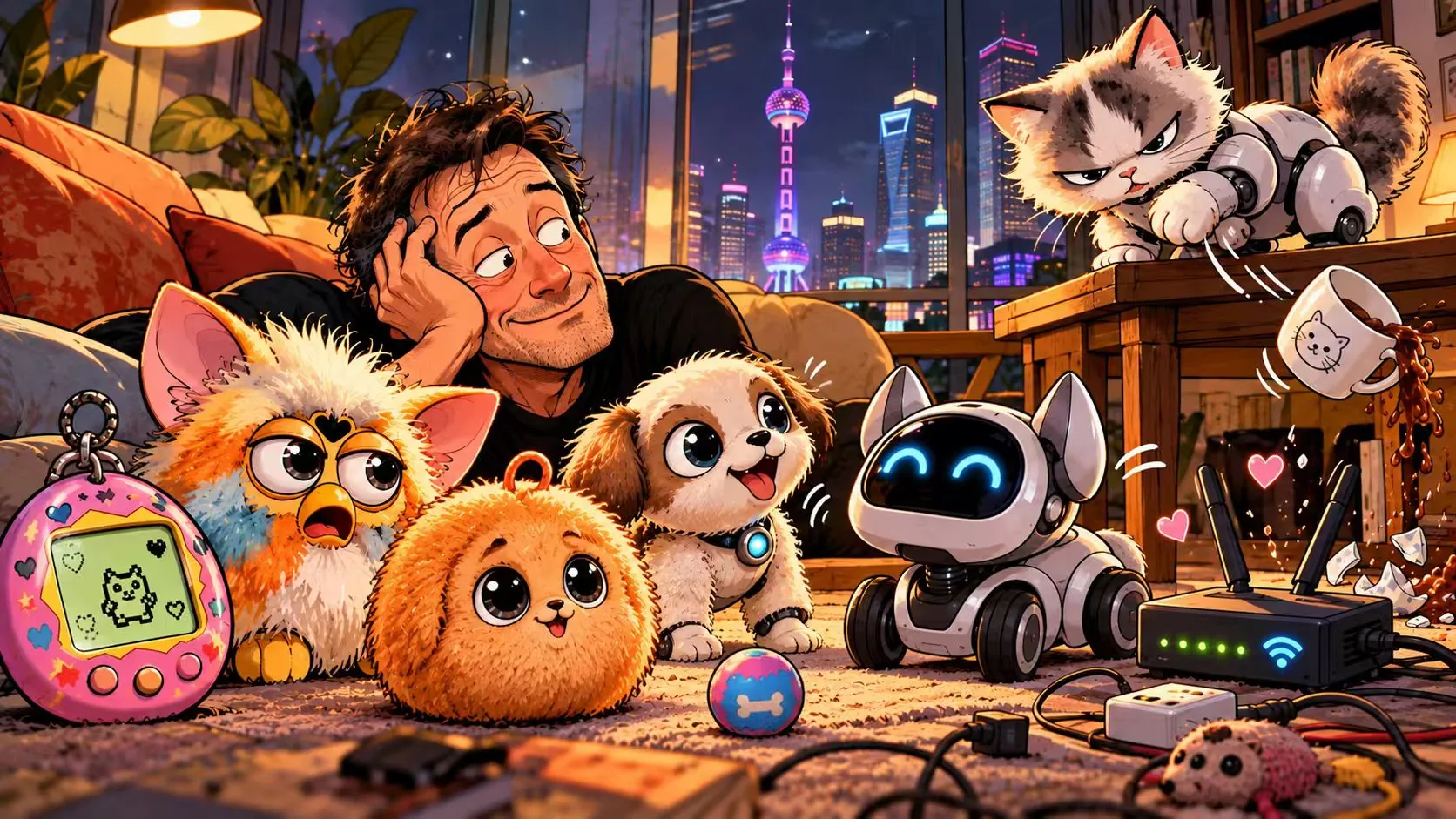
China's New Kind of Pet Remembers Your Conversations, Never Needs a Vet, and Doesn't Pee on the Carpet
I once wrote about dogs in strollers in China, and after that I stopped being surprised by what comes rolling towards me in a shopping mall. Baby,...