
Inner Drivers That Shape Your Decisions
By Nowshenzhen · December 19, 2025 · 3 min read · 👁 774 views

A Practical Lens for Business Owners and High Achievers
Over the past two weeks, we explored why goals often lose momentum — first through internal conflict, when competing priorities pull attention in different directions, and then through the brain’s natural resistance to change, which favors safety and familiarity over long‑term gain.
In practice, this shows up in moments that matter: pushing too hard, hesitating when clarity is required, or delaying decisions you know you need to make. These are not failures of intelligence or strategy. In business, they are signs of internal drivers competing for control.
When decisions are frequent, high‑stakes, and carry long‑term consequences, internal misalignment becomes operational. It affects decision quality, execution speed, communication, and productivity — often without being recognized as the source of the problem.
Human behavior is shaped by multiple motivational systems. In business, these systems don’t appear as abstract psychology; they show up through choices, trade‑offs, and follow‑through. When priorities compete internally, leaders experience hesitation, over‑control, distraction, or inconsistent execution — even when the strategy itself is sound.
Catalyst Personality Profiling provides a practical way to understand these internal drivers and how they influence leadership behavior. Within Catalyst, the WSN framework is one of the tools used to examine how execution, stability, and exploration interact internally, and how those dynamics affect decision‑making, communication, productivity, and goal achievement in real business contexts.
The goal is not self‑analysis for its own sake. It is clarity — clarity about why you respond differently across situations, why certain decisions feel harder than expected, and how to lead yourself and others with greater consistency.
The Warrior — Execution and Direction
The Warrior represents the drive to act, decide, and move things forward. It values structure, clarity, and measurable outcomes. In business, this driver supports execution, momentum, and decisive leadership.
When the Warrior is leading appropriately, priorities are clear and action follows. Decisions feel contained rather than overwhelming, and progress compounds through consistent effort.
When this driver dominates unchecked, however, it often leads to over‑control. Leaders carry too much themselves, push past sustainable limits, and reduce delegation in the name of speed. Over time, this erodes leadership bandwidth and increases burnout risk — not because execution is wrong, but because it is unbalanced.
The Settler — Stability and Continuity
The Settler represents the drive for stability, consistency, and relational cohesion. In business, this driver supports trust, continuity, and the ability to maintain progress after initial momentum fades.
When the Settler is active, communication improves. Leaders listen more carefully, consider impact, and create conditions where teams can function without constant intervention.
When this driver leads too strongly, however, it favors comfort over advantage. Difficult conversations are delayed, necessary changes are postponed, and familiar structures remain in place longer than they should. The business does not fail — it stalls.
The Nomad — Exploration and Adaptation
The Nomad represents the drive to explore, adapt, and generate new possibilities. It supports creativity, strategic flexibility, and responsiveness to change.
In business, this driver allows leaders to see options others miss and to adjust when conditions shift. It keeps organizations from becoming rigid or outdated.
When uncontained, however, Nomad energy fragments focus. Initiatives multiply, priorities shift, and execution loses coherence. The result is not innovation, but dilution — progress spread too thin to compound.

When the Drivers Are Led Deliberately
Every business decision reflects an internal balance — or imbalance — between execution, stability, and exploration. When these drivers are aligned, decisions are clearer, communication is more consistent, and productivity is easier to sustain. Progress feels intentional rather than forced.
When they compete, leaders experience internal friction that shows up externally: second‑guessing, stalled initiatives, or momentum achieved at the cost of exhaustion.
Self‑leadership begins with a simple, practical question:
Which internal driver is shaping this decision — and is it supporting the outcome I want?
Understanding this dynamic does not replace strategy. It removes friction from executing it.
Putting This Into Practice
If you want to understand what’s actually driving your decisions — especially when priorities compete, pressure increases, or momentum stalls — clarity has to come before change.
The Catalyst Personality Assessment is a practical starting point. It helps you identify:
- which internal driver most influences how you make decisions, communicate, and execute
- where internal misalignment may be creating friction or slowing consistency
- how to lead yourself with greater clarity, focus, and sustainable momentum toward meaningful goals
This brief personality assessment offers insight into how your internal drivers interact and influence your decisions.
Scan the code to begin.

Keep reading
All in Articles
Ours Dim Sum Rave: Where Dim Sum Met the Dance Floor
Ours has done it again, this time, dropping electronic beats right into the heart of a tea house steeped in the nostalgic charm of 20th-century Hong...
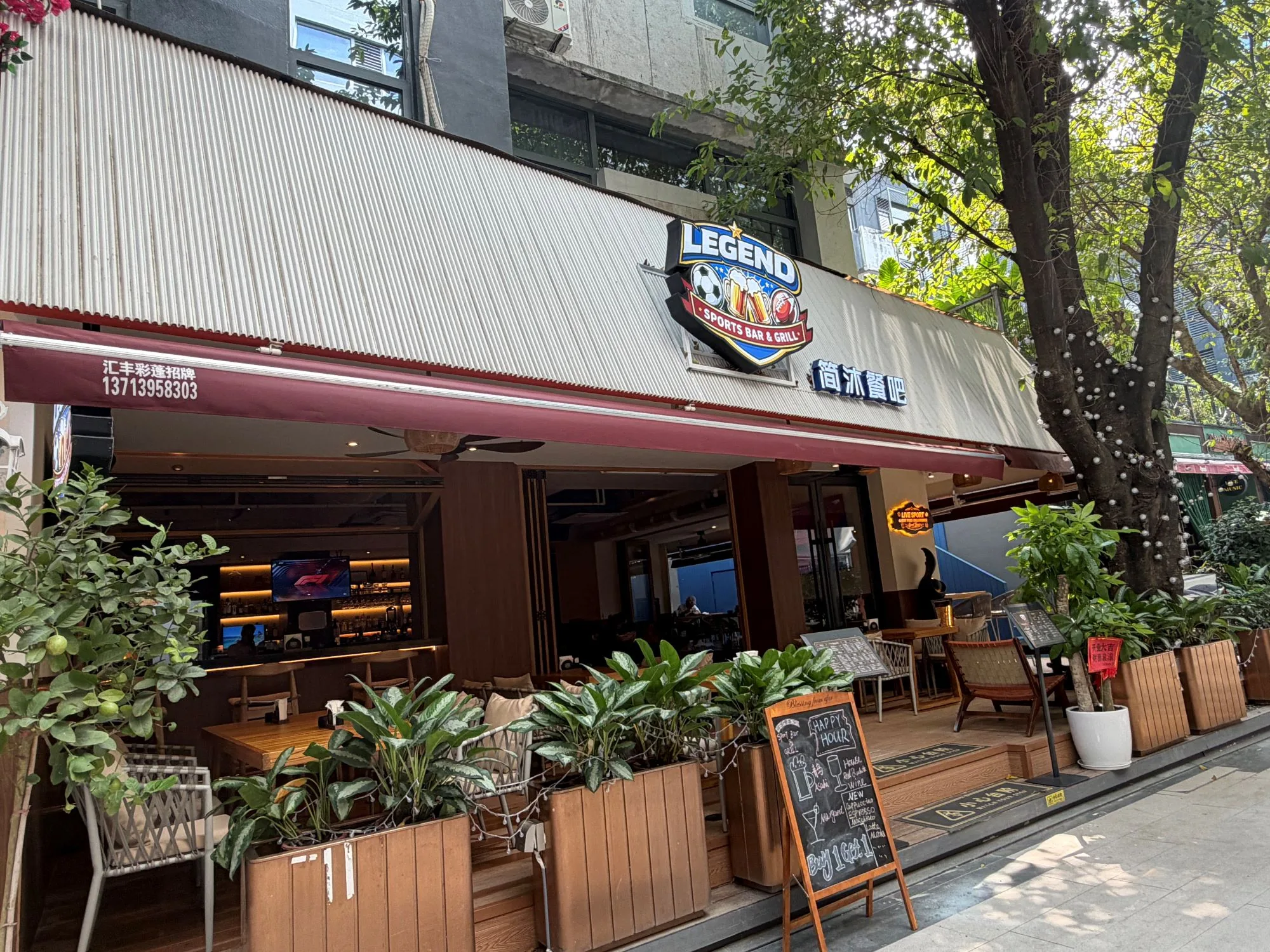
Legend Levels Up: Shekou's Beloved Hangout Reinvents Itself as a Sports Bar & Grill
Some bars are places you go. Legend is a place you return to. For six years, this Shekou staple has anchored the corner of Nanhai Yiku, pouring...

Free Sky Observation Deck: Shenzhen's Window to the Clouds at 547.6 Meters
High above the pulsating heart of Shenzhen, the Free Sky Observation Deck commands the 116th floor of the Ping An Finance Center at a...