
No Helmets, No Therapy, No Problem!
By Chris Gassner · May 8, 2026 · 6 min read · 👁 156 views

Growing up without supervision, safety gear, or emotional check-ins, and why that might not have been the worst idea.
We were like clueless cats. And we were perfectly fine with it.
Looking back, our childhood in the seventies and eighties was basically one big outdoor experiment with an unclear outcome and a surprisingly high survival rate. As soon as homework was done somewhere between “barely finished” and “that should be good enough” we were out. And then we were gone. Just… gone.
Our parents had a parenting concept that today would probably be classified as gross negligence: trust.
To them, we were like clueless cats. They knew we existed somewhere nearby, heard the occasional noise, but rarely actually saw us. The only solid proof of our existence were the devastated kitchen cabinets.
We played football, cowboys and Indians, fought, made up again, and somehow developed a social system that worked remarkably well without parenting books or conflict resolution workshops. If you wanted to play, you adapted. If you annoyed everyone, you ended up sitting alone on the curb, reflecting on your life. Early self-reflection. No therapy required.
Adults were never around. If someone had mentioned helicopter parents, we probably would have thought it was a new type of rescue aircraft.
If you messed up, there was no parent-teacher summit on equal footing. There was a dressing-down. Short, clear, effective. No parent would have ever thought of blaming the teacher. The teacher was authority, not a negotiation partner.
We walked to school alone. On the first day, my mother showed me the way. After that, the principle was simple: you have eyes, you have legs, good luck.
Today, kids are escorted right into the classroom, photographed, documented, and probably tracked by satellite. There are more pictures of a three-year-old today than there used to be of entire family lineages.
I have exactly one, maybe two photos from my childhood. No series, no albums, no step-by-step documentation of my development. Just a couple of pictures somewhere in a drawer. Not big, not sharp. You can’t tell whether I’m smiling or peeing my pants. Which, to be fair, visually wasn’t much of a difference back then.
Materially… let’s call it rustic. There was central heating, sure, but the basement was still its own world, mainly because of the potatoes down there, quietly developing a personality of their own. Bathing once a week, because you had to think carefully about whether you wanted to be clean or just slightly less dirty.
And then my father. A kind of human instruction manual for “stop making a fuss.” When he sliced his hand open while fixing the car, you had to actively convince him to take a break. “It’s nothing, just a scratch.”
Speaking of today.
Today we sit in air-conditioned offices, talking things to death until nobody really knows what the original topic was, but everyone nods like they do.
At some point, it just drives you insane.
The construction worker doesn’t have a burnout. He has a finished workday. And he knows what he’s done. The wall stands. Straight. Done.
We, on the other hand, go in circles and call it alignment.
Yeah, I’m exaggerating a bit. But our parents’ generation was actually pretty happy, maybe because things weren’t over-explained all the time.
Bad news was just… there. You heard it, shrugged, and went outside.
Today, we live in a time of maximum safety and minimal resilience.
These days, “trauma” gets thrown around so much it could sit on a spice rack. Back then, it actually meant something big.
Now it’s oat milk with a trace of lactose.
Fewer real problems, so we upgrade the small ones.
Back then, we rode rusty bikes down hills with no helmets, no protection, and absolutely no safety concept, and nobody asked whether that was emotionally appropriate. Today, the first question is whether the situation might be psychologically challenging.
In my environment, everyone now seems to have some kind of food intolerance. Statistically, it’s around two percent of the population. In reality, it feels more like twenty. In certain groups, closer to 154.3 percent.
We grew up eating things that today would probably require a warning label. If anything was left over, you could use it to strip paint off furniture. Sustainability on a whole different level.
Today, food is a political statement. Back then, it was survival.
And then there’s this whole self-discovery thing.
After graduation, people take a year off to “find themselves.”
If I had told my father that, he would have stared at me for a second and said, “Find yourself? You’re standing right here.
And if I had added that I needed space, he probably would have shrugged and said, “Then stand somewhere else.”
Done. Therapy completed.
Today, even twenty-year-olds take courses to figure out who they are.
My father would’ve said: “That’s you. End of story.”
Now everything is “amazing.” Crooked drawing? Genius.
Unreadable handwriting? Unique.
Maybe that’s the problem.
“Marlon Pascal has terrible handwriting.”
“That’s because he’s gifted.”
Of course. Gifted people write illegibly. And bilingual just means he now writes illegibly in two languages.
Globalization at its finest.
And while we’re busy worrying about whether a comma might emotionally offend someone, everyday life outside has shifted a bit as well.
The other day, I overheard a father telling his son on a bicycle:
“If you don’t put your helmet on right now, there’s no bubble tea.”
That’s the punishment today.
Back then, we got two weeks without TV, house arrest, and had to mow the lawn in blazing heat. And today? No bubble tea.
What a cruel world we live in.
If everything you do is amazing, failure hits differently.
Success is you. Failure is… circumstances.
Responsibility shrinks. Expectations grow.
But the standards somehow stay very high.
And then they sit in job interviews. A bit of experience here, a bit of “finding themselves” there. Expectations, on the other hand, are crystal clear: high salary, full flexibility, minimal friction.
“What are your strengths?”
“I can tell very quickly when something isn’t good for me.”
My father would have said: “Life isn’t good for you. Now what?”
Today, there’s a workshop for that.
Companies are now facing a new kind of challenge: employees who, after two weeks, want to check whether the job “feels right” for them. Back then, you hoped you would fit in. Today, the company gets evaluated first.
And heaven forbid there’s criticism.
Back then, criticism was a hint that you could improve. Today, it’s often taken personally.
So there you have a 23-year-old sitting in an office, being told that their Excel sheet might not be perfect yet, thinking: “I think I need some space.”
Space from what? One column too many?
At the same time, new roles are emerging. People whose job it is to make sure everyone feels good, that the mood is right, that nobody feels overwhelmed. Back then, that was the colleague who bought you a coffee and said, “Pull yourself together.”
And somewhere between clueless-cat childhood, bicycle parenting, and bubble tea, I sometimes wonder if we’ve lost exactly what made us stable back then.
Not the hardship. Not the lack.
But that simple, almost naive understanding that life isn’t perfect… and still works just fine.
Chris Gassner
Keep reading
All in Articles
Ours Dim Sum Rave: Where Dim Sum Met the Dance Floor
Ours has done it again, this time, dropping electronic beats right into the heart of a tea house steeped in the nostalgic charm of 20th-century Hong...
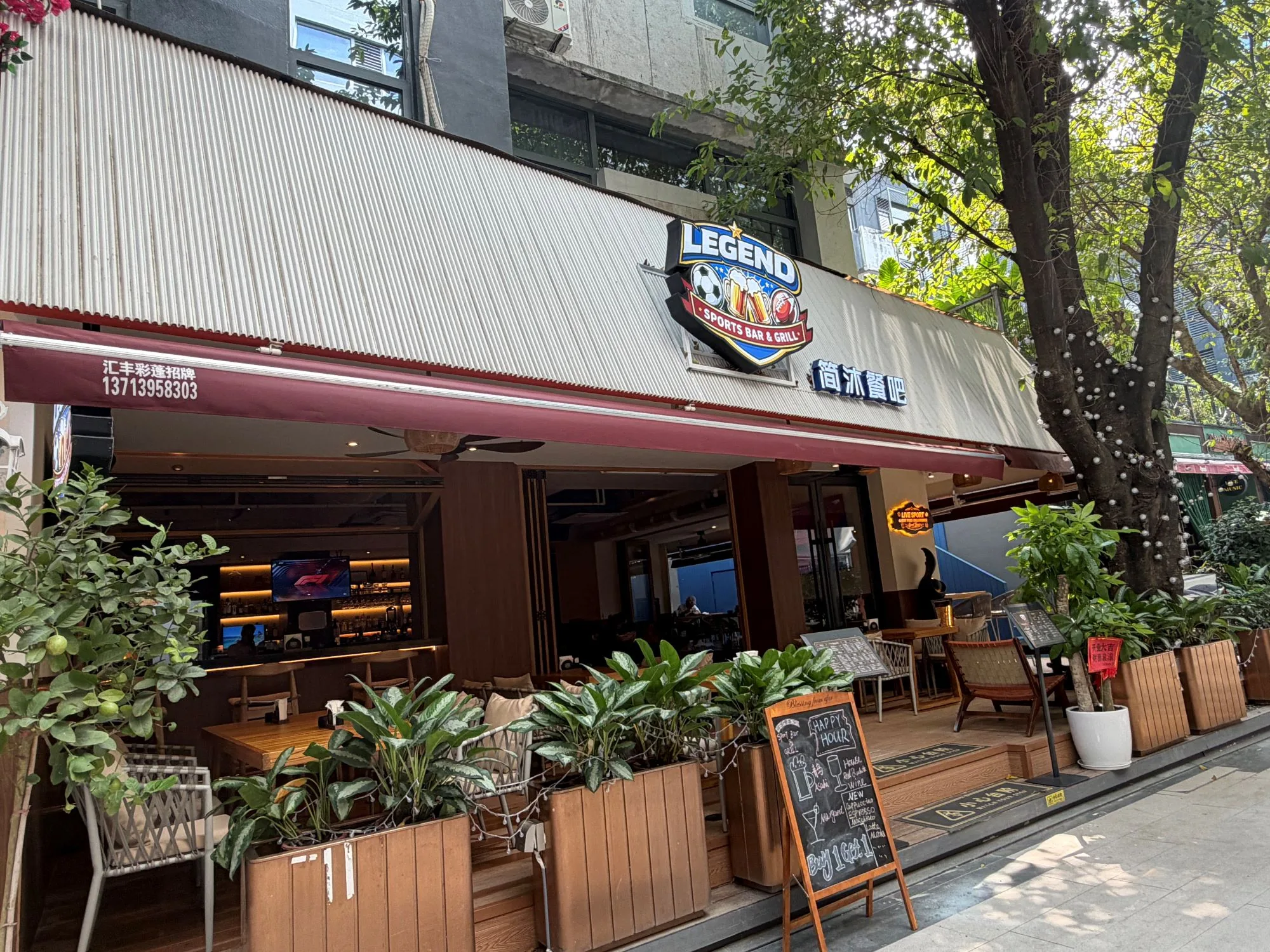
Legend Levels Up: Shekou's Beloved Hangout Reinvents Itself as a Sports Bar & Grill
Some bars are places you go. Legend is a place you return to. For six years, this Shekou staple has anchored the corner of Nanhai Yiku, pouring...

Free Sky Observation Deck: Shenzhen's Window to the Clouds at 547.6 Meters
High above the pulsating heart of Shenzhen, the Free Sky Observation Deck commands the 116th floor of the Ping An Finance Center at a...