
Shenzhen vs Europe: Same Future, Just Different Speeds
By mflorido · May 28, 2026 · 5 min read · 👁 21 views

Europe and China today often talk about the same technologies, the same future industries and the same fashionable buzzwords. Digitalization. Artificial Intelligence. Automation. Smart Manufacturing. Electric Vehicles. Everything sounds wonderfully modern once it appears on a conference stage next to a giant LED screen and somebody wearing white sneakers says the word “ecosystem” at least fourteen times before lunch.
The real difference only becomes visible once somebody actually has to build something.
Because that is where you suddenly realize that Europe and China may be looking at the same future, but they are moving toward it with completely different speeds. One side often moves like a German public office carefully processing a parking permit from 1997. The other moves like a Shenzhen electric scooter driver during heavy rain, carrying three packages, one iced tea and absolutely no fear of death.
And I am not saying this theoretically.
I have lived in China for more than twenty years. I sit exactly between these two worlds every single day. And sometimes it honestly feels like both systems operate on different planets entirely.
In Europe, a new project often begins with meetings. Lots of meetings. First there is a meeting to determine who should attend the next meeting. Then comes the alignment meeting. Then the preliminary discussion meeting. Then the follow up meeting. Eventually somebody creates an Excel sheet which later gets transferred into another Excel sheet that somehow looks even more complicated than the first one.
And at some point, somebody quietly says the word “compliance,” and suddenly the entire room looks as if Christmas has just been cancelled by legal department.
Meanwhile, in China, something completely different happens.
Somebody sends a WeChat message to a supplier:
“Can you build this?”
Two hours later, a blurry workshop photo arrives.
Four hours later, there is a video.
The next morning, a prototype suddenly exists.
Not perfect. Of course not. Maybe slightly crooked. Maybe noisy. Possibly mildly dangerous. But real. Physical. Existing.
And that difference is now reshaping entire industries.
Europe often tries to eliminate as much risk as possible before anything even starts. China frequently starts first and adjusts along the way. For many European engineers, this sounds about as comforting as hearing:
“We test the parachute during the jump.”
But that exact mentality creates speed.
China understood something extremely important very early: modern markets move faster than traditional decision making structures. Many products today no longer win because they are perfect. They win because they appear quickly, improve quickly and adapt quickly.
Europe, meanwhile, still often operates under the assumption that a product should only enter the market once everything has been fully analyzed, documented, approved, certified and discussed from every imaginable angle.
And yes, in some industries that absolutely makes sense. Nobody wants to board an airplane controlled by software developed on pure optimism and two cans of Red Bull.
But outside highly regulated sectors, this mentality slowly becomes a problem.
I see it constantly, especially among medium sized European companies. The engineering quality is excellent. The experience is enormous. The technical understanding is world class. But between the original idea and actual execution there are sometimes so many approval chains, internal discussions and risk evaluations that the market itself has already moved on before the first sample even exists.
And while Europe is still discussing whether a market opportunity is economically viable, China is often already selling the second generation of the product.
The funny part is that China from the outside still looks chaotic. And honestly, sometimes it absolutely is chaotic. Anyone who has walked through Huaqiangbei at night knows exactly what I mean. Everything flashes. Everything beeps. Somewhere, somebody sells a device that is simultaneously a power bank, Bluetooth speaker, air purifier, translator and probably also a rice cooker.
Right next to him sits a guy soldering electronics with three different tools at once while distorted Chinese techno screams from a tiny speaker that sounds like it is fighting for survival.
And somehow, innovation still happens there.
Not because everything is perfectly organized.
But because movement never really stops.
Europe, on the other hand, increasingly confuses speed with danger. And danger with irresponsibility. The result is a culture where many companies would rather organize another strategy workshop than simply test something in the real world.
China approaches things more pragmatically.
A failed idea is often not viewed as a disaster. It is viewed as information.
Okay. Did not work.
Next version.
And that mentality allows Chinese companies to evolve at a speed that genuinely overwhelms many European businesses today.
The difference became especially visible during the rise of electric vehicles and consumer electronics. While Europe was still debating whether electric cars were truly market ready, entire districts of Shenzhen were already filled with EVs. While endless studies were being written somewhere else, China was already building charging infrastructure, battery factories and supply chains.
Not perfect.
But operational.
And that matters enormously.
Because modern markets no longer wait politely until the final committee approves the PowerPoint presentation.
Many European companies still rely heavily on the assumption that superior quality alone guarantees success. And to be fair, European quality in many sectors remains exceptional. German machinery. European medical technology. Industrial precision engineering. These industries still enjoy enormous global respect.
But modern markets increasingly operate differently.
Today, the winner is not always the company with the best product.
Often, the winner is simply the company that appears first.
China understood that products today are no longer static. They continuously evolve through updates, customer feedback, rapid iteration and new versions. The market itself becomes part of the development process.
For many traditional European structures, this feels deeply uncomfortable. Too unfinished. Too fast. Too uncontrolled.
But reality is shifting exactly in that direction.
And no, this does not mean Europe suddenly needs to copy everything China does. Nobody is suggesting abandoning safety standards or regulatory systems. In sectors like medical technology, automotive or industrial automation, stability and reliability remain absolutely critical.
But Europe needs to be careful that processes themselves do not eventually become more important than movement.
Because in many cases, that is exactly what is starting to happen.
Sometimes the real risk today is no longer moving too fast.
Sometimes the real risk is becoming incapable of moving at all.
And perhaps that is the uncomfortable truth hidden behind the term “China Speed.”
It is no longer just about cheaper production or fast factories.
It is about the fact that China realized something many others still struggle to accept:
Speed itself has become a competitive advantage.
Maybe China did not become faster.
Maybe Europe simply forgot what movement looks like.
Chris Gassner
May 28, 2026
Keep reading
All in Articles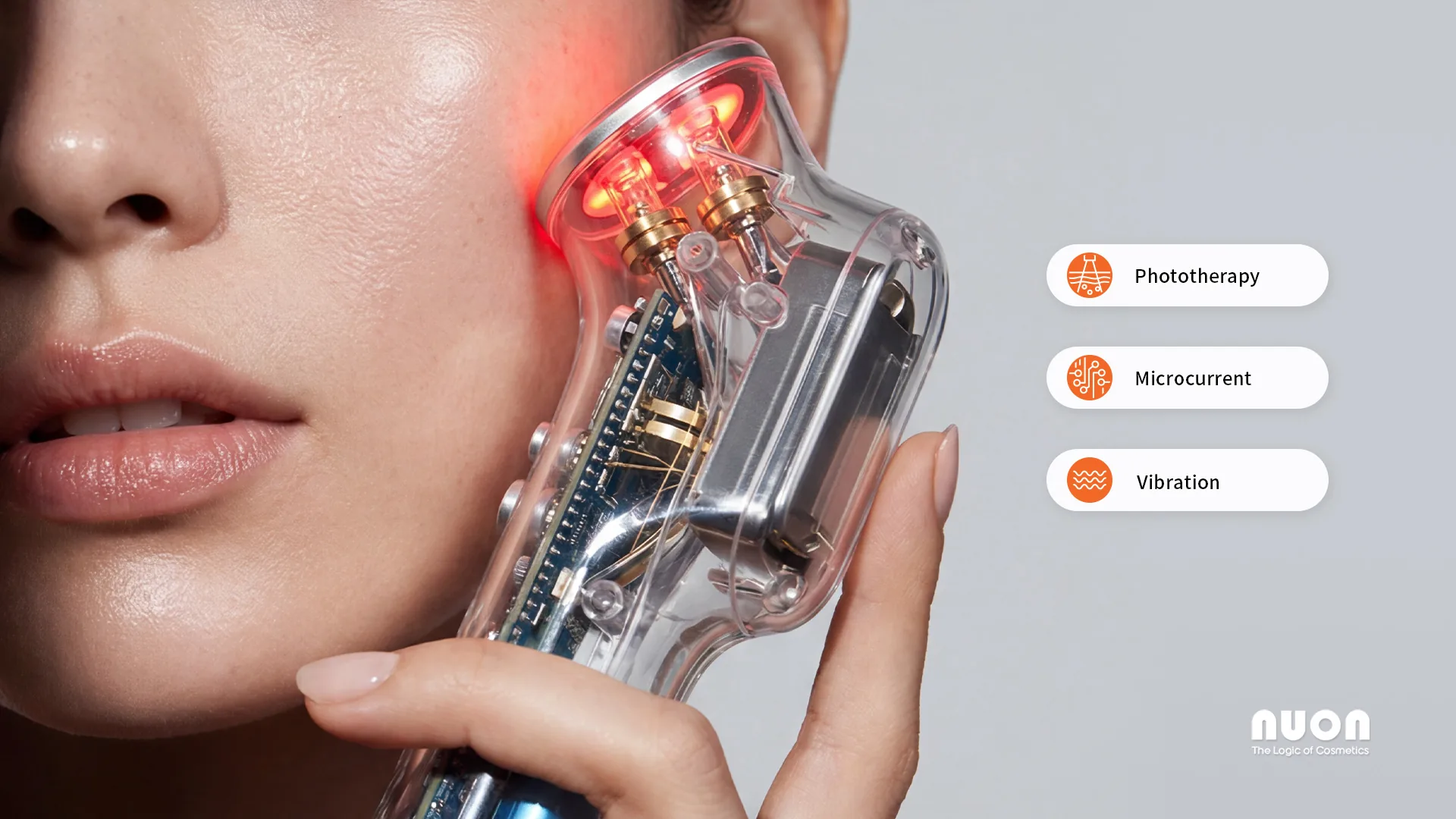
What Happens When Beauty Packaging Gets Smarter?
Think about the skincare products on your bathroom shelf.A serum comes in a bottle. A cream comes in a jar. An applicator helps spread the...
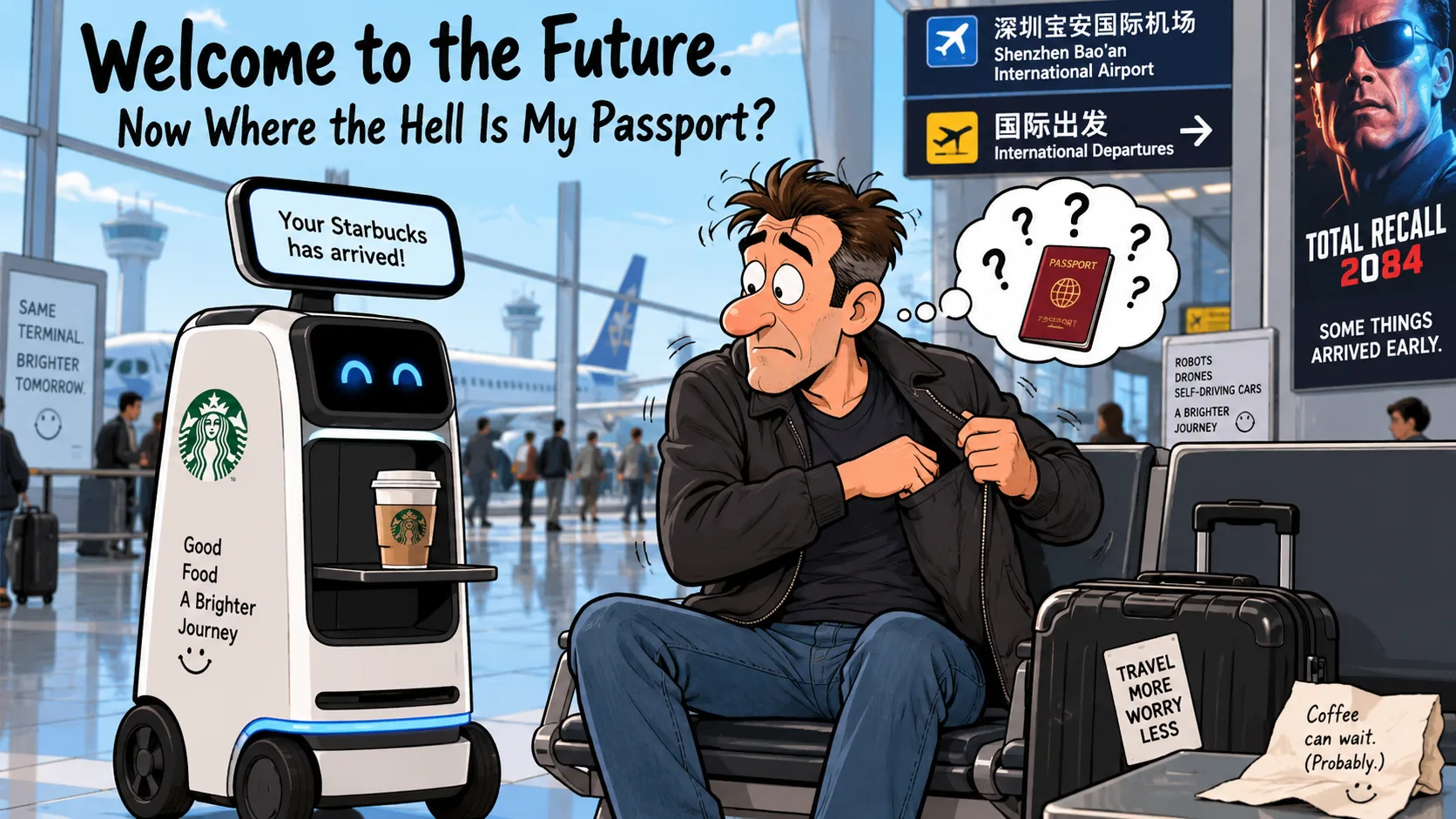
The Future Arrived With My Coffee: No Jetpacks, No Teleportation, Just Starbucks on Wheels
Someone sent me an article about food delivery robots at Shenzhen Bao’an International Airport. Normally I open things people send me, skim...
Shine Brighter Than Ever: New Whitening Promotion From ARRAIL Dental
Shine Brighter Than Ever: New Whitening Promotion After the overwhelming response to our last whitening offer, ARRAIL Dental is back with a...