
Early On, You Were the System. Now, You're the Constraint
By Alex Durdev · January 26, 2026 · 4 min read · 👁 588 views

The role-shift experienced entrepreneurs face after real scale
If you've ever rewritten your team's work at 11 PM, sent an email you wish someone else had sent, or made a "quick decision" that should have been theirs—you already know this isn't about time management. And if you've recognized the three frictions—the accountability gap, the intuition trap, and the permission loop—you also know this isn't about hiring better people.
So the real question becomes uncomfortable, but unavoidable:
If the cost is real, and the mechanism is structural… why does the work still keep coming back to you?
The answer isn't operational.
It's personal.

When Being "The One Who Can Handle It" Stops Scaling
Early on, being the system was your greatest advantage. You held the context, made the decisions, and connected dots faster than anyone else. Speed came from proximity—everything ran through you, and for a while, that worked beautifully.
But somewhere between your first five hires and a real leadership team, something quietly changed.
You didn't stop delegating. You certainly didn't lower your standards. And yet, the most important pieces of work still find their way back to your desk. Not dramatically. Not because something failed. Just… eventually.
If you're honest, you probably tell yourself it's faster to step in and finish it than to explain it again.
That's the moment most experienced entrepreneurs miss.
When Nothing Is "Broken," But Everything Slows Down
From the outside, everything looks fine. Clients are happy. The team is busy. Delivery happens.
Inside the business, though, a quieter pattern is forming. Decisions start to pause until you weigh in. Work moves forward, but it tends to stall around 85–90%. Projects don't fail—they just hover until you make the final call, rewrite the last section, or resolve a decision no one realized they owned.
The thing is, this doesn't look like dysfunction. It looks like competence with friction.
And competence with friction is how most scaling businesses quietly stall.
Why This Keeps Happening (Even With Great People)
It's not because your people are incapable or that they don't care. I see this all the time in teams that are genuinely smart and committed. It happens because the system still treats you as the safest place for uncertainty to land.
Think about a typical project lifecycle.
At the start, there's an accountability gap. Everyone contributes, but ownership is a little fuzzy. Nothing feels dangerous yet, so it goes unnoticed.
In the middle, the intuition trap kicks in. Standards live in your head, not on paper. "Good enough" is assumed, not defined. The team aims as best they can, but the target keeps moving slightly—because it's invisible.
Then, right at the end, the permission loop closes the circle. A decision feels risky. The cost of being wrong suddenly matters. No one is explicitly authorized to decide—so it comes back to you, usually late, usually urgent.
The work doesn't fail.
It just finishes… with you.
Why "Letting Go" Is the Wrong Advice
This is where most advice gets lazy.
You don't need to "let go" more. You don't need to trust harder. And you definitely don't need another reminder to delegate.
Founder dependency isn't a character flaw. It's a design flaw in how work flows through your business.
When founders can't step away from their business for even a week, they're not building an asset—they're building a job. And that job can't be sold, scaled, or sustained.
That's not a weakness. That's a structural problem waiting to be fixed.
The Metric That Exposes the Constraint
One thing I've noticed is that when founders shift from doing to designing, their dashboards often don't evolve with them.
There's one metric that cuts through the noise quickly: Revenue per Employee.
If your team is growing but this number is flat or declining, it's usually a sign that workflow is leaking somewhere. Decisions are slowing things down. Standards are unclear. And more often than not, the founder is quietly absorbing the friction to keep things moving.
Architects don't measure effort.
They measure leverage.
Here's the Part Most Articles Skip
This shift isn't blocked by logic.
It's blocked by identity.
You built this company by being the one who could handle it. You were the closer, the fixer, the person people relied on when things mattered.
Letting go of that role doesn't feel like optimization—it feels like losing a part of yourself.
A lot of seasoned entrepreneurs aren't burned out because they're weak or disorganized. They're burned out because carrying the gravity of every final decision is exhausting, even when the business is "successful."
Success at this stage isn't about being the strongest person in the room anymore.
It's about building enough support that you can finally breathe.

What the Architect Actually Changes
When I sit down with a founder to map this out, we don't start with a spreadsheet. We start by looking at their inbox to see who is "handing back" the uncertainty.
Operational independence isn't about disappearing. It's about redesigning how work finishes:
- Moving from shared contribution to single-point accountability
- Turning intuition into a documented Definition of Done
- Replacing late-stage escalation with clear decision guardrails
Modern operators are also using leverage where it makes sense—AI-assisted dependency mapping, early risk signals, automated checks—not to control people, but to prevent uncertainty from pooling at the top.
When this works, something subtle happens.
Work stops coming back.
Not because people try harder—
but because the system finally knows how to end.
Why This Matters Now
Founder constraint doesn't just cost evenings and weekends. It quietly caps enterprise value, strategic freedom, and exit optionality.
This isn't a leadership flaw.
It's a design flaw.
And design can be fixed. If you're wondering whether you might be your own bottleneck, I'm happy to chat. No pitch, no agenda—just a conversation to help you see what's actually happening and what might help.

January 26, 2026
Keep reading
All in Articles
Ours Dim Sum Rave: Where Dim Sum Met the Dance Floor
Ours has done it again, this time, dropping electronic beats right into the heart of a tea house steeped in the nostalgic charm of 20th-century Hong...
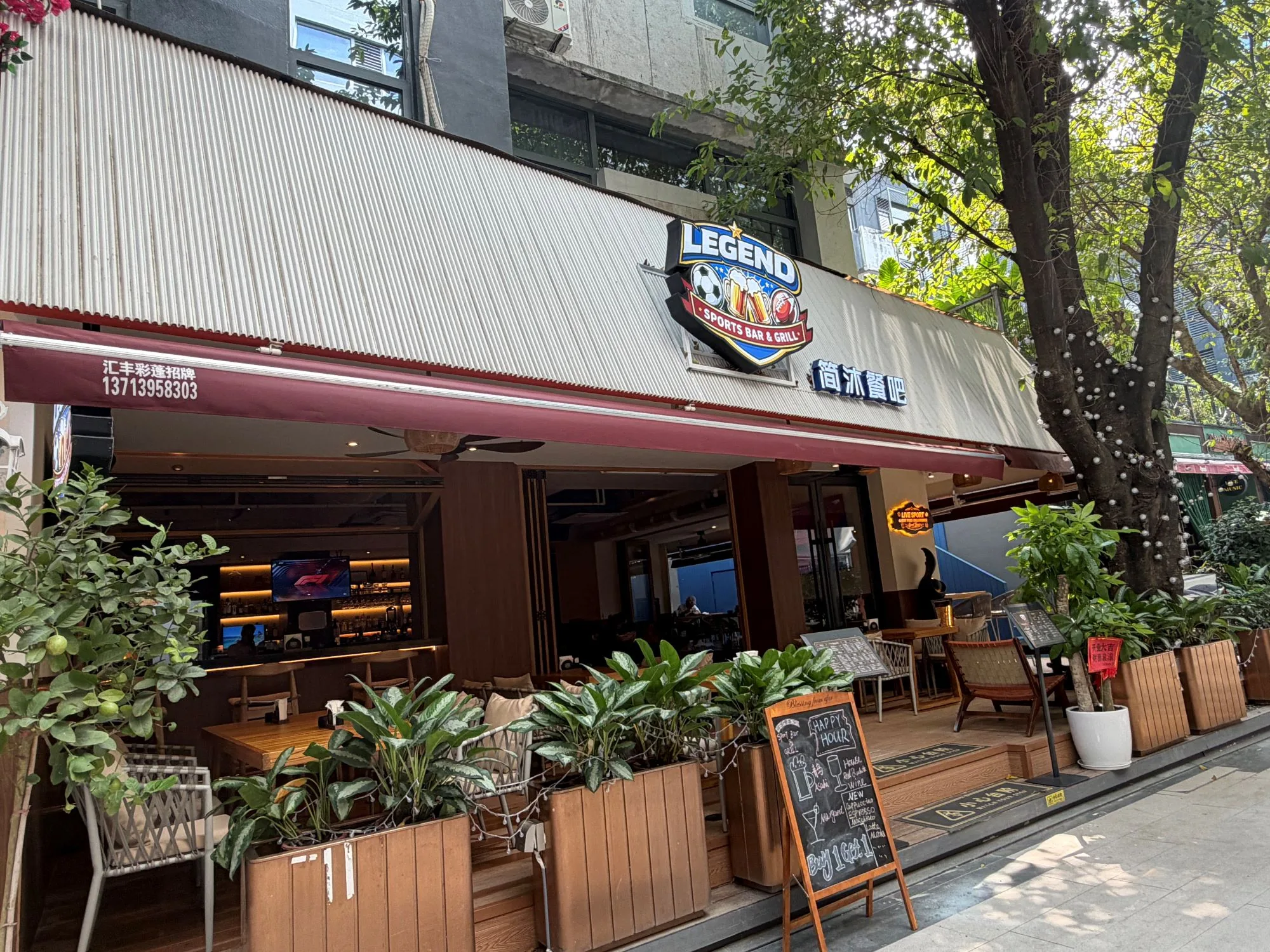
Legend Levels Up: Shekou's Beloved Hangout Reinvents Itself as a Sports Bar & Grill
Some bars are places you go. Legend is a place you return to. For six years, this Shekou staple has anchored the corner of Nanhai Yiku, pouring...

Free Sky Observation Deck: Shenzhen's Window to the Clouds at 547.6 Meters
High above the pulsating heart of Shenzhen, the Free Sky Observation Deck commands the 116th floor of the Ping An Finance Center at a...