
QR Code Overlords: How China Turned My Phone Into My Life Support, Until It Isn’t
By Chris Gassner · March 19, 2026 · 4 min read · 👁 378 views

There was a time, not so long ago, when going to a restaurant required only two essential skills: the ability to sit down and the ability to read a menu. If you were particularly advanced, you might even ask the waiter a question. Something daring like, “What do you recommend?” These were glorious, analog times.
Today, when you enter a restaurant in China, the first thing you notice is not the smell of food, not the friendly waiter, and certainly not the menu. No. The first thing you see is a small black-and-white square staring at you from the table like a silent authority figure. The QR code. It sits there calmly, almost politely, but with the quiet confidence of something that knows it has already won. The message is clear: Scan me. There is no menu. There is no waiter explaining dishes. There is only the QR code, patiently waiting for you to submit your phone to its digital authority.
You scan it.
Suddenly your phone transforms into everything the restaurant used to provide. It becomes the menu, the waiter, the cashier, the ordering system, and even possibly the restaurant manager. You scroll through photos of dishes that all look suspiciously perfect. You select items, add quantities, confirm your order, and send it into the mysterious digital universe. Somewhere in the kitchen, a screen lights up. A cook nods. A dish is prepared. And that’s it. No conversation. No confusion. No accidental ordering of something completely unexpected because you misunderstood the waiter. In fact, there is almost no human interaction at all. The only human being you might see is the person who brings the food, often silently, like a highly efficient food-delivery ninja who places the plate in front of you and disappears again before you can even say thank you.
But the QR code does not stop at restaurants. Here, the QR code has quietly taken over life itself. Parking your car? QR code. Paying the parking fee? QR code. Entering certain buildings? QR code. Ordering delivery? QR code. Buying water from a vending machine? QR code. At some point I realized something quite remarkable: I no longer carry cash. I rarely use my credit card. My wallet has slowly transformed into a decorative object that travels with me purely out of habit. My real wallet is now my phone.
Which brings us to a slightly uncomfortable truth. My entire existence seems to depend on one single thing: the battery level of my phone. If my phone works, life works. If my phone runs out of battery, things become… complicated.
Imagine the situation. You are sitting in a restaurant. You are hungry. The QR code is right there. The system works beautifully. Efficient, elegant, modern. You reach for your phone. Two percent battery. You open the menu. One percent battery. You panic slightly and try to order quickly. Your phone dies.
Suddenly you are sitting in a modern Chinese restaurant, surrounded by technology, surrounded by QR codes, surrounded by digital efficiency… and you are completely powerless. You cannot order. You cannot pay. You cannot even prove that you intended to pay. In the old world, if your phone died, it was mildly inconvenient. You simply continued your life like a normal human being. In QR-code World, however, a dead phone places you in a very interesting social category: the technologically disabled.
You start looking around nervously for a waiter, hoping to explain your situation like a person from the last century. “Excuse me… my phone battery died.” This sentence sounds completely reasonable in your head. But the waiter looks at you with a mixture of confusion and mild concern, as if you had just announced that your horse had collapsed outside and you now needed help feeding it. Then he politely points to the small charging station standing in the corner of the restaurant. You know the one. A tower of portable batteries that you can rent. Very modern. Very convenient. Very Chinese.
“Just rent a power bank,” he suggests.
For a brief moment you feel relieved. Civilization has been saved. Until you realize the small technical detail. To rent the battery… you have to scan a QR code. With your phone. Which currently has no battery. So the solution to your dead phone problem… requires a working phone. At this point the system has reached a level of digital perfection that even a Swiss watchmaker might admire. You are now trapped inside a beautifully designed technological loop. No battery → no QR code. No QR code → no rented battery. No rented battery → still no battery. A perfect circle.
So after a few minutes of admiring this masterpiece of digital logic, I do the only reasonable thing. I leave the restaurant. I go home. I tell myself that it’s probably healthier to cook something anyway. Which is when I arrive at my car and discover the final twist of modern life. The car does not start. Not because it’s broken. Because it needs my phone. No QR code this time. Just the small, slightly annoying detail that the car key is… in the phone.
So now I’m standing in a parking lot, in one of the most technologically advanced cities on the planet, unable to order food, unable to charge my phone, and unable to start my car. Which means the final step of my digital journey is now very simple. I have to ask another human being for help. And suddenly I realize something. Maybe that waiter wasn’t confused earlier. Maybe he was just witnessing something rare. A customer who accidentally returned… to the analog world.
Chris Gassner
Keep reading
All in Articles
Ours Dim Sum Rave: Where Dim Sum Met the Dance Floor
Ours has done it again, this time, dropping electronic beats right into the heart of a tea house steeped in the nostalgic charm of 20th-century Hong...
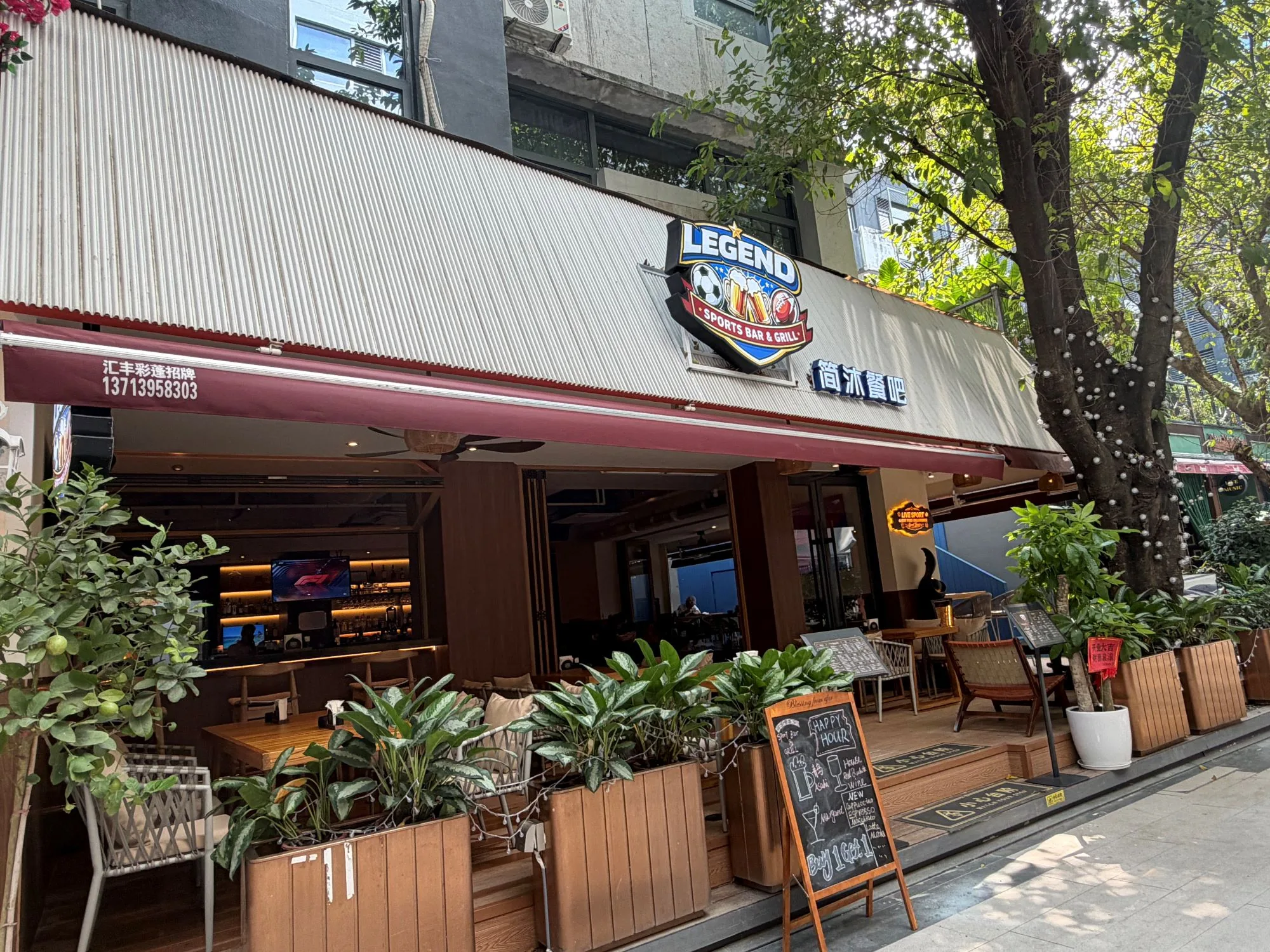
Legend Levels Up: Shekou's Beloved Hangout Reinvents Itself as a Sports Bar & Grill
Some bars are places you go. Legend is a place you return to. For six years, this Shekou staple has anchored the corner of Nanhai Yiku, pouring...

Free Sky Observation Deck: Shenzhen's Window to the Clouds at 547.6 Meters
High above the pulsating heart of Shenzhen, the Free Sky Observation Deck commands the 116th floor of the Ping An Finance Center at a...