
Understanding Individual Income Tax for Foreign Employees in China
By Eddie B · June 29, 2026 · 5 min read · 👁 0 views

For many foreigners working in China, Individual Income Tax (IIT) is one of the most confusing aspects of living and working here. Questions such as "Am I considered a tax resident?", "What is the 183-day rule?", "How is my tax calculated?", and "Do I need to pay tax on my overseas income?" are questions we receive on a regular basis.
Unfortunately, there is a great deal of outdated or incorrect information circulating online, which often creates unnecessary confusion for both employees and employers. Understanding the basic principles of China's Individual Income Tax system can help both individuals and businesses remain compliant while avoiding costly mistakes.
Tax Residency – The 183-Day Rule
The first step in determining how your income tax is calculated is establishing whether you are considered a China tax resident or a non-tax resident.
If you spend 183 days or more in China during a calendar year, you are generally regarded as a China tax resident for that tax year. If you spend less than 183 days in China, you are generally treated as a non-tax resident.
This distinction is important because each category uses a different method for calculating Individual Income Tax.
How Individual Income Tax is Calculated
For China tax residents, employment income is generally taxed using the annual cumulative withholding method. Instead of calculating tax independently every month, your employer calculates your tax based on your cumulative earnings from the beginning of the year. As your annual income increases, you may move into a higher tax bracket, and the monthly tax withheld is adjusted accordingly.
For non-tax residents, tax is generally calculated separately each month. Each month's salary is assessed independently to determine the applicable tax rate, without taking previous months' income into consideration.
Understanding which calculation method applies to you is one of the most important steps in ensuring your payroll is calculated correctly.
China's Individual Income Tax Rates
China uses a progressive tax system, meaning that higher taxable income is subject to higher tax rates.
Current Individual Income Tax rates range from 3% to 45%, depending on your taxable income. Lower income is taxed at lower rates, while higher income gradually moves into higher tax brackets.
It is important to remember that moving into a higher tax bracket does not mean all of your income is taxed at that higher rate. Instead, different portions of your income are taxed at different rates, resulting in a gradual increase in the overall tax payable.
Standard Deduction
For employment income, individuals are generally entitled to a standard monthly deduction of RMB 5,000 before tax is calculated.
This deduction reduces the amount of taxable income, meaning tax is only calculated on the remaining balance after the deduction has been applied.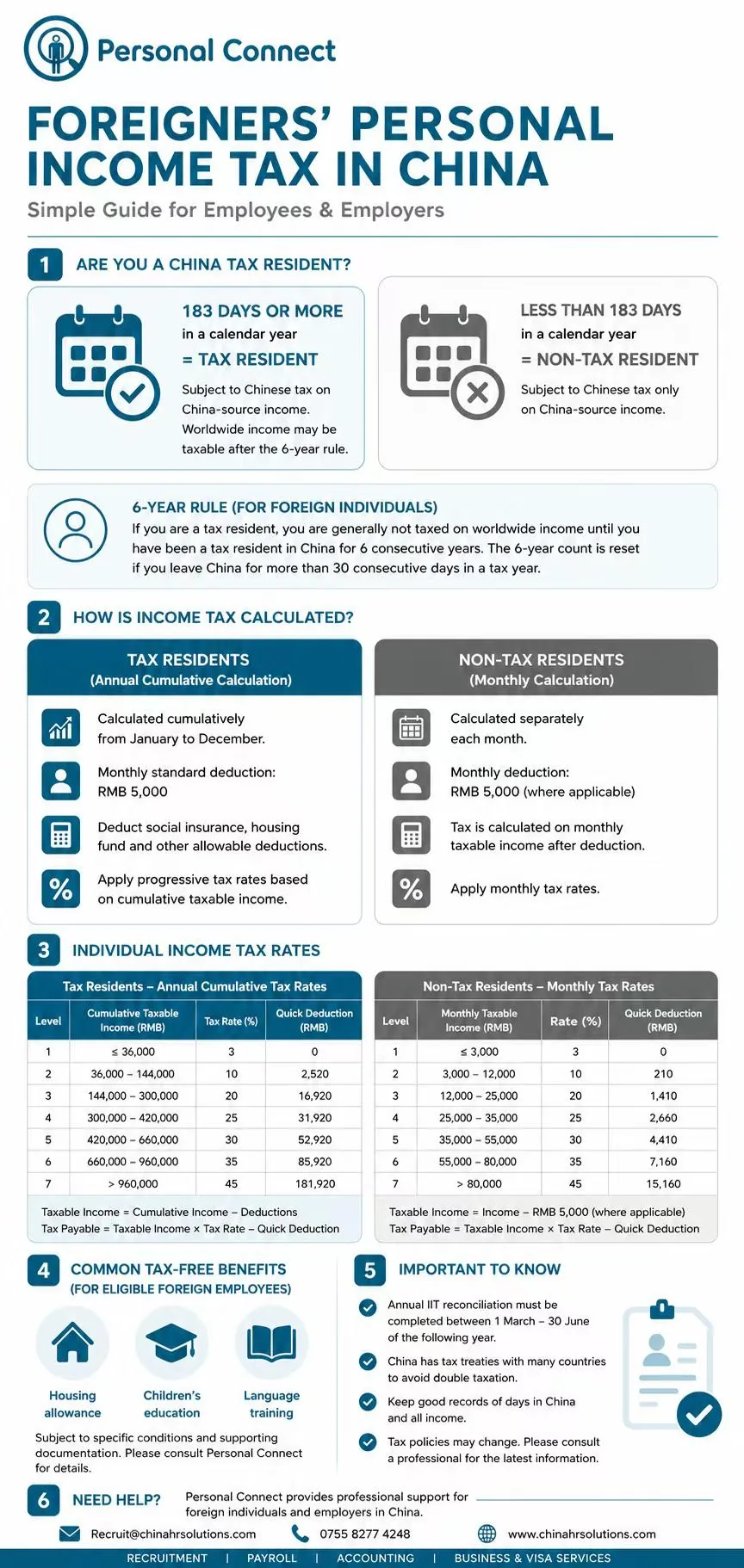
Common Tax-Free Benefits for Foreign Employees
One of the advantages available to many foreign employees working in China is the ability to receive certain employer-paid benefits on a tax-preferential basis, provided the relevant conditions are met and the required supporting documentation is maintained.
When structured correctly, these benefits can reduce an employee's taxable income and lower their overall Individual Income Tax liability.
Some of the most common tax-free benefits include:
Housing Allowance – Employer-paid or reimbursed rental expenses for accommodation in China may qualify for preferential tax treatment when properly documented.
Children's Education – Tuition fees for eligible children attending qualifying schools in China may be reimbursed by the employer under the applicable tax rules.
Language Training – Chinese language training expenses paid by the employer for foreign employees may also qualify for preferential treatment.
Home Leave Travel – Certain home leave transportation expenses may qualify for tax-preferential treatment under the current regulations.
Meal and Laundry Allowances – In some cases, reasonable meal and laundry expenses provided by the employer may also receive preferential tax treatment.
These benefits are not automatically tax-free. They must be structured correctly by the employer, supported by appropriate documentation, and comply with the latest tax regulations. If these conditions are not met, the benefits may instead be treated as taxable salary.
Important Things Every Foreign Employee Should Know
While understanding the tax calculation is important, there are several additional rules that every foreign employee should keep in mind.
Annual Individual Income Tax Reconciliation
China operates an annual Individual Income Tax reconciliation system. If required, taxpayers must complete their Annual IIT Reconciliation between 1 March and 30 June of the year following the relevant tax year. During this process, any additional tax payable must be settled, while eligible taxpayers may also receive a refund if too much tax was withheld during the year.
Double Taxation Agreements
China has signed Double Taxation Agreements (DTAs) with many countries around the world. These agreements are designed to help prevent individuals from paying tax twice on the same income and may provide valuable tax relief depending on your country of residence and personal circumstances.
Keep Accurate Records
Foreign employees should keep accurate records of the number of days spent inside and outside China each year, together with employment contracts, payroll records, and details of any income earned both inside and outside China. Good record keeping can be extremely important if additional information is requested by the tax authorities.
Tax Rules Can Change
China's tax regulations and preferential policies are updated from time to time. Information found online is often outdated or may only apply to specific situations. For this reason, it is always advisable to seek professional advice before making important tax or payroll decisions.
Why This Matters for Employers
For employers, understanding China's Individual Income Tax system is equally important. Incorrect payroll calculations or misunderstandings regarding tax residency can result in payroll errors, employee disputes, additional tax liabilities, penalties, and unnecessary complications during tax audits.
Ensuring that foreign employees are taxed correctly is not only a legal requirement but also an important part of providing a positive employee experience. Proper payroll administration demonstrates professionalism, builds employee confidence, and helps reduce compliance risks for the business.
How Personal Connect Can Help
At Personal Connect, we assist both companies and foreign professionals with payroll administration, Individual Income Tax compliance, company registration, accounting, visa services, and a wide range of HR and business support services throughout China.
Whether you are hiring your first foreign employee, expanding your business in China, or simply want to ensure your payroll processes remain compliant, our experienced team is here to help.
We hope you found this guide helpful. If you have any questions regarding Individual Income Tax or any of our other services, please don't hesitate to get in touch.
Website: http://www.chinahrsolutions.com
Address: Suite 18A, Building C, Greenview NEO Building, 6011 Shennan Avenue, Chegong Miao, Futian, Shenzhen
深圳市福田区深南大道6011号绿景NEO大厦C栋18A
Phone: (+86) 0755 8277 4248
Email: [email protected]

Keep reading
All in Articles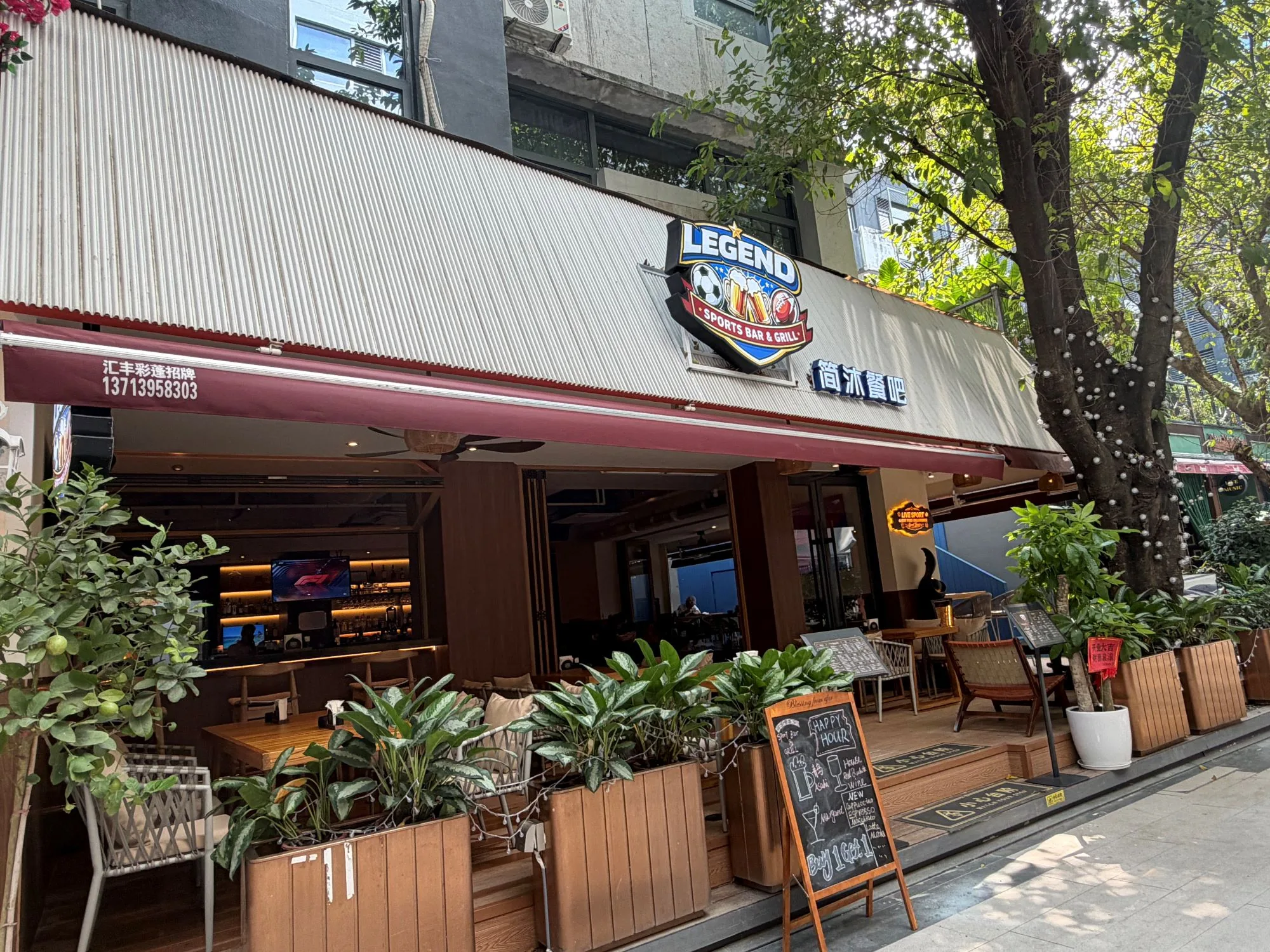
Legend Levels Up: Shekou's Beloved Hangout Reinvents Itself as a Sports Bar & Grill
Some bars are places you go. Legend is a place you return to. For six years, this Shekou staple has anchored the corner of Nanhai Yiku, pouring...

Free Sky Observation Deck: Shenzhen's Window to the Clouds at 547.6 Meters
High above the pulsating heart of Shenzhen, the Free Sky Observation Deck commands the 116th floor of the Ping An Finance Center at a...

China's New Kind of Pet Remembers Your Conversations, Never Needs a Vet, and Doesn't Pee on the Carpet
I once wrote about dogs in strollers in China, and after that I stopped being surprised by what comes rolling towards me in a shopping mall. Baby,...